Posted on

Is the ‘land issue’ back on the agenda?

Andrew Bibby

The views expressed in this post are those of the contributor and do not necessarily represent the views of all members of the Gritstone co-operative.

Sometimes we forget our history.  It wasn’t really so very long ago that the issue of land ownership and land taxation was one of the hottest of all hot political topics.  Lloyd George precipitated the most serious constitutional crisis of modern times when his ‘People’s Budget’ in November 1909 proposed a series of taxes on land value – and the House of Lords, packed with landowners, promptly voted it down. Cue an emergency General Election and, eventually, the compromise deal of the 1911 Parliament Act which rebalanced a little the powers of the two houses of Parliament.

Continue reading Is the ‘land issue’ back on the agenda?
Posted on

A Green Recovery?

Laurence Rose

The views expressed in this post are those of the contributor and do not necessarily represent the views of all members of the Gritstone co-operative.

Finishing a book a week into lockdown, when that book is all about humankind’s relationship with the rest of nature, seemed at first like unfortunate timing. Publishing it six months later, with pandemic still raging around the world, it’s as if I’d planned it that way all along. I re-read the text and found little I needed to change. Covid seemed to reinforce everything I wanted to say, and it was mostly a matter of slotting in a few mentions of it in appropriate places. But it also seemed appropriate to add a postscript just before committing it to print, so I wrote this:

While the human world was shutting down and locking its doors, the non-human world continued nonchalantly to turn.

Continue reading A Green Recovery?
Posted on

Grouse Grouse

Andrew Bibby

The views expressed in this post are those of the contributor and do not necessarily represent the views of all members of the Gritstone co-operative.

The heather is blooming in my part of the Pennines, which means that the guns will be out on the moors picking off the red grouse.

You can support grouse shooting on the grounds that it is a country tradition (although modern driven grouse shooting only developed in the nineteenth century, so it’s perhaps not all that traditional).

Continue reading Grouse Grouse
Posted on

Goodbye the walk to the bus?

Colin Speakman

The views expressed in this post are those of the contributor and do not necessarily represent the views of all members of the Gritstone co-operative.

One of the unforeseen, but devastating impacts of the Covid-19 crisis is the damage being inflicted on public transport. Usage of public transport during the height of the pandemic collapsed to between 5% and 10% of normal, in part a result of constant messages to avoid public transport or only use for “essential” work journeys.

Continue reading Goodbye the walk to the bus?
Posted on

Walk yellow

Andrew Bibby

The views expressed in this post are those of the contributor and do not necessarily represent the views of all members of the Gritstone co-operative.

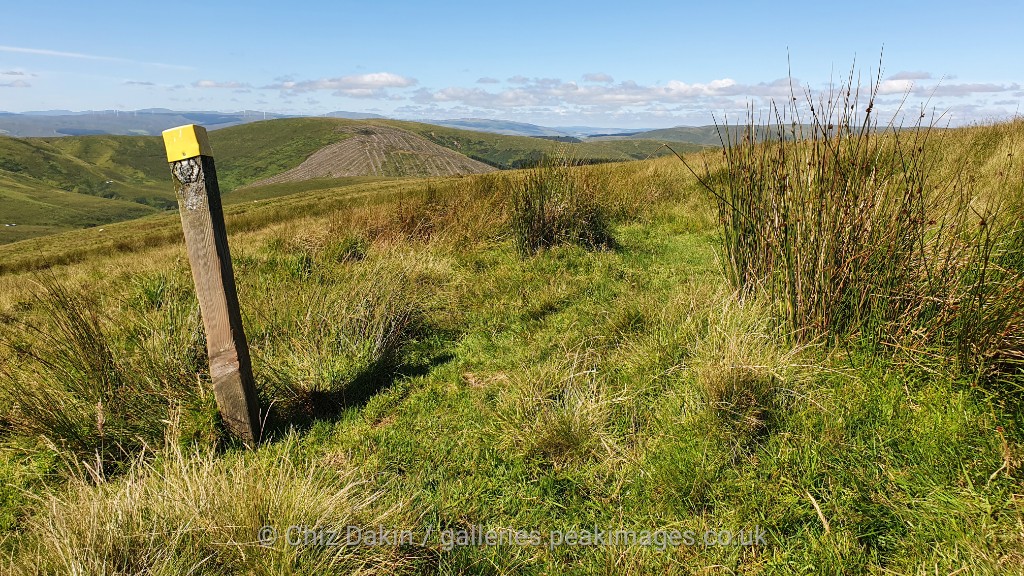
Let me tell you the story of Cherry Tree Clough. That’s what I call it, although it also has the second, more workaday, name of Rowshaw Clough.

It’s a little wooded valley in the Yorkshire Pennines complete with a stream running through it, not very far at all from a very well-known Beauty Spot. (Capital letters are called for, I think: this is a stretch of country that has attracted visitors for over a century.)

Continue reading Walk yellow
Posted on

Why is our countryside full of rubbish?

Andrew McCloy

The views expressed in this post are those of the contributor and do not necessarily represent the views of all members of the Gritstone co-operative.

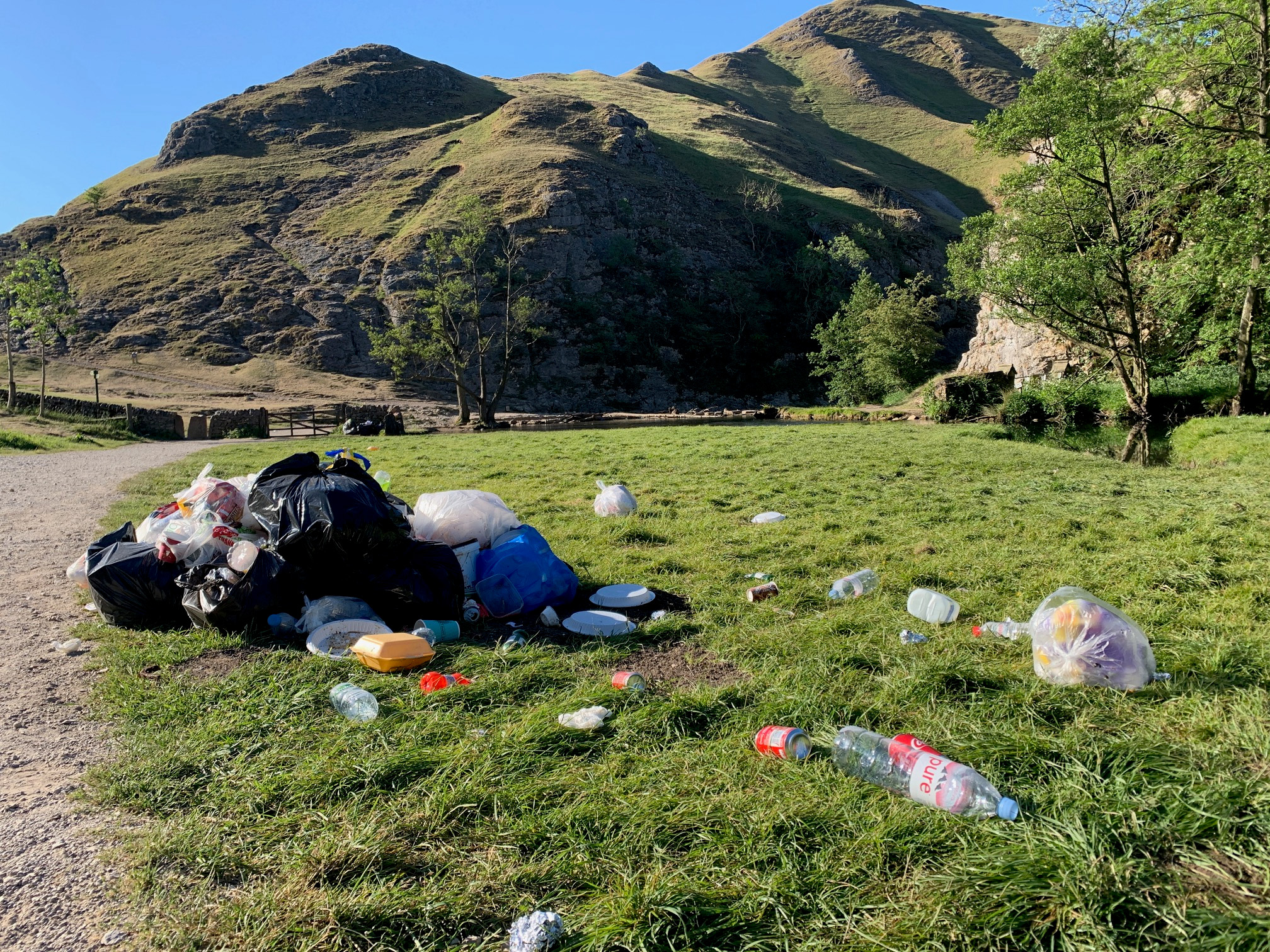
“An indescribable heap of filthy paper, empty fruit tins, broken bottles, cigarette and chocolate wrappers, matchboxes, cigarette ends and other litter.” This was how the Sheffield Daily Telegraph described what local schoolchildren, encouraged by the Sheffield & Peak District branch of what was then called the Council for the Preservation of Rural England (CPRE), had collected from Stanage in the Peak District one Bank Holiday. That particular litter pick took place in 1929*.

Continue reading Why is our countryside full of rubbish?
Posted on

Funding the Countryside

Andrew Bibby

The views expressed in this post are those of the contributor and do not necessarily represent the views of all members of the Gritstone co-operative.

I was searching my way through Google a day or two back, researching the devastating effect of Right to Buy in rural areas (a topic, perhaps, for another day) when I came across a blog from the Campaign to Protect Rural England’s chief executive at the time when what became the Housing Act 2015 was first being discussed.

The blog included an interesting claim: “one senior Tory told me that no one has a right to live in a village any more than they have a right to live in Mayfair. Someone may have grown up in a village and work in it, but if they cannot afford to buy a house in it they should move to the nearest affordable town.”

Continue reading Funding the Countryside
Posted on

Transport in National Parks and the Coronavirus Crisis

Colin Speakman

The views expressed in this post are those of the contributor and do not necessarily represent the views of all members of the Gritstone co-operative.

Colin’s blog, in a slightly different form, was first published by the Craven Herald. © Colin Speakman

Around 25 years ago my wife and I decided to give up our car, partly because we couldn’t afford the repair bill to our elderly Citroen, but also because we thought, living where we did in Ilkley in West Yorkshire, we could enjoy a car-free lifestyle, using excellent local buses and trains and walking and cycling whenever we could –  what is now the Government’s new green agenda.

But for the first time in those 25 years we are regretting that decision.

Continue reading Transport in National Parks and the Coronavirus Crisis
Posted on

The countryside after Covid-19 – has anything changed?

Andrew Bibby

The views expressed in this post are those of the contributor and do not necessarily represent the views of all members of the Gritstone co-operative.

So has anything changed?  The English countryside is once again there to enjoy for all those who want. You can still walk, let’s say, from Wasdale Head up to Pillar, keeping fingers crossed that the clouds will be high and the Isle of Man visible across the water.  You can again stroll Ballard Down and around Old Harry Rocks, looking across to Poole Harbour and the Isle of Wight. You can hike to the Kinder Downfall, just like you could before Covid-19 came along to change a lot of people’s plans.

Continue reading The countryside after Covid-19 – has anything changed?
Posted on

The best way to speed up development is to lock down our protected areas.

Laurence Rose

The views expressed in this post are those of the contributor and do not necessarily represent the views of all members of the Gritstone co-operative.

Here’s something you don’t often hear a conservationist say: I agree that we need to reform the planning system. And I agree that if we do, the aim should be to make it easier and quicker to bring development proposals through the system and get them approved, if they merit it.

And I would start with protected areas. Like, I think it would be good if we had some.

Continue reading The best way to speed up development is to lock down our protected areas.
Posted on

We must see our national parks as an agent of positive change post-covid

The views expressed in this post are those of the contributor and do not necessarily represent the views of all members of the Gritstone co-operative.

Andrew McCloy

This blog was first posted by Green Alliance in April 2020 https://greenallianceblog.org.uk/

Over the frenetic weekend before the lockdown, the sight of thousands of visitors pouring into national parks like Snowdonia and the Lake District, against government guidelines, was perhaps an inevitable response from a panicky urban population. Setting aside what it said about their demographic and social background (largely white, affluent, middle class, car-owning) it was also testimony to people’s deep emotional attachment to landscape and a hunger for the outdoors. From the romantic poets to the Kinder Scout mass trespassers, personal relationships with landscape and places of great natural beauty – and crucially our right to access them – have been at the heart of how we interact with our national parks.

Continue reading We must see our national parks as an agent of positive change post-covid
Posted on

Gritstone authors launch Countryside after Covid blog

What will be the issues facing the English countryside after the loosening of the lockdown rules on July 4th?

Some of the country’s most experienced writers on the countryside and the natural world will be sharing their own thoughts and observations on the new Countryside after Covid blog, which will be launched on July 4th.  The six writers are members on the author-owned publishing co-operative Gritstone Publishing, and the blog will be available at https://gritstonecoop.co.uk/aftercovid/. The blog will also from time to time include contributions from guest bloggers.

The blog will be launched by initial contributions from three Gritstone members.  Andrew McCloy, the author of The Pennine Way (Cicerone, 2016) and of the forthcoming Peak District Pubs (Gritstone, 2020), is also a local councillor and Chair of the Peak District National Park Authority. As such he has been directly involved in the issues of public access to the Peak District during the covid-19 lockdown.  Andrew will be blogging about the need for our national parks to take a lead in creating positive change after lockdown.

Laurence Rose, the nature writer who is author of The Long Spring (Bloomsbury, 2018) and the forthcoming Framing Nature (Gritstone, 2020), will be responding to the prime minister’s recent pronouncement on loosening aspects of the planning system. Laurence will be arguing for nationally important sites for nature to be better protected from planning decisions.

Andrew Bibby, author of Back Roads through Middle England (Gritstone, 2017), will write on how the rural economy can best be protected in the interests of both visitors and lower-income residents of the countryside.

Future blogs will be contributed by Gritstone’s other authors, Colin Speakman, Chiz Dakin and Chris Goddard.

Access the Countryside after Covid blog and post your own comments and responses: https://gritstonecoop.co.uk/aftercovid/

Posted on

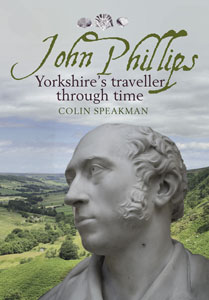
Member Colin Speakman’s John Phillips Book getting great reviews

Our member Colin Speakman’s latest book under the Gritstone imprint has been in the news recently, and is getting some great reviews from book critics.

Here’s a few of the ones we’ve noticed from Professor Colin Waters (Yorkshire Geological Society), Peter Hogarth (Yorkshire Philosphical Society), Roly Smith (Outdoor Writers and Photographers Guild), the North Yorkshire Moors Association and the Darlington and Stockton Times.

If you are interested in the history of science, particularly one of the great contributors to the development of geology as a science, and have a love of the county of Yorkshire, I heartily recommend this book.

Professor Colin Waters, Yorkshire Geological Society

Although ‘this book does not attempt to be a biography of Phillips’, it does a pretty good job as such. But it is also much more than a biography, conveying Phillips’ -and the author’s –enthusiasm: a veritable Excursion around the Yorkshire Mountains, Rivers and Sea Coast in its own right…

…This book –lavishly illustrated –is not primarily a geological treatise: but those who think they are not particularly interested in geology will undoubtedly learn more geology than they realise, thanks to Colin Speakman’s and John Phillips’ enthusiasm…

…What better way to escape the confines of lockdown than to travel through time and space with John Phillips?

Peter Hogarth, Yorkshire Philosophical Society

It places Phillips as not only a pioneering geologist, but also as one of the great walker-writers and interpreters of the Yorkshire countryside….

…Of course Speakman himself is a distinguished member of that band of teachers and guidebook authors which has followed in the footsteps of Phillips in interpreting the moors and dales of Yorkshire to the visitor.

Roly Smith, Outdoor Focus (the magazine of the Outdoor Writers and Photographers Guild)

“Using words and rare photographs in his absorbing book, Speakman shares Phillips’ passion for the Yorkshire landscape across the Dales, Moors and Coast.”

Darlington & Stockton Times

Peopled with a host of scientific personalities and characters of the times and packed with absorbing detail, this informative book is a satisfying and entertaining read that will go a long way to giving due recognition to the influential legacy of one of our finest outdoor writers and scientists, John Phillips, an extraordinary traveller through time.  

Voice – Journal of the North Yorkshire Moors Association
Posted on

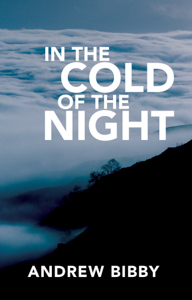
In the Cold of the Night featured on BBC Three Counties Radio

Lovely to hear the review of “In the Cold of the Night” by Gritstone member, Andrew Bibby, on BBC Sounds. It was reviewed by Morag Watkins – a self-confessed bookaholic – and regular guest book reviewer on Nick Coffer’s slot on BBC Three Counties Radio:

This is a detective story that a friend gave me to read and as it is about a group of people doing the Three Peaks Challenge and as I have done that I found it interesting because I know many of the places that are mentioned.

It concerns a group of staff from a residential caravan park who are doing the Challenge largely because the boss, Richard Meade says they must. They manage Ben Nevis with the help of their guide Rug, (yes that is his nickname) and he drives them to Wasdale Head to ascend Scafell Pike.

By this time Richard Meade has been on the phone for a lot of the journey and is still on the phone and he tells the party to go on, he will catch them up in a few minutes but he never does. His disappearance results in the mountain rescue team being called out and a massive search operation being mounted.

His body is found a long way away from where he should have been. Enter the detective, the reporter, the family and the staff of the caravan park to confuse, give false leads and generally take the reader on a merry dance which is not resolved until the last few pages.

Morag Watkins, guest reviewer on BBC Three Counties Radio, August 2019
Posted on

Creating the Anne Lister (Gentleman Jack) walk from Shibden Hall by Chris Goddard

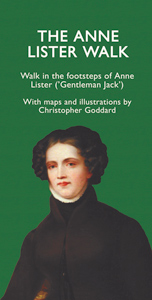
Anne Lister walk Front Cover image

Chris Goddard, creator of the Anne Lister walk map, chats about how he was asked to produce the map and what it shows on the walk around “the larger Lister estate”.

“The Anne Lister Walk ties nicely in with the BBC’s recent TV series Gentleman Jack and was launched amid full-blown Listermania. However, it was produced before anyone in Calderdale had seen the TV series, so it focuses more on the real Anne Lister sites than those featured on the small screen (in fact it turns out that a lot of the sites used for filming are too far away to walk to anyway). The council officers at Shibden Hall approached me earlier in the year to produce a map with a simple walking route around the sites of the larger Lister estate, so I devised this 5.5-mile walk to show off the best Shibden Dale had to offer.

Though it starts in Shibden Park, it quickly climbs out of the valley to Beacon Hill and follows the edge of the hills west of Halifax, with great views over the town throughout. It then drops back down into the valley past the sites of several of Anne Lister’s coal mines – sadly there is little or nothing to see of these, like the nearby grand mansion of High Sunderland Hall, felled in the 1950s due to subsidence caused by those same coal mines. However, Scout Hall’s pleasing symmetry, Walker Pit’s fine folly (named after Ann Walk of course) and Shibden Mill Inn more than make up for this.

After a pint or a bite to eat, it is an easy walk back down the valley bottom to Shibden Hall, where you can explore the interior of this 15th century mansion that was greatly reshaped by Anne Lister. The whole park around it is of her making and I’m glad that this map is part of a much-overdue process of rediscovering this inspiring 19th century woman.”

Posted on

Dales Way at 50 Podcast

Our member Colin Speakman, creator of the Dales Way 50 years ago, takes a walk with Countrystride’s Mark Richards (@Fellranger1) through Dentdale.

The podcast (50mins long) can be found on the countrystride website (as well as embedded below). Colin chats about his delight in creating one of the most popular and longest-existing long-distance walks in the UK; and also discusses brewing in Dentdale, infamous knitters and the local eminent geologist of the 19th Century, Adam Sedgwick.

Posted on

Dales Way 50 year celebrations

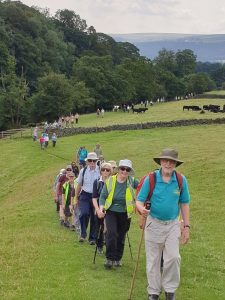
Over 70 walkers joined local Gritstone member and author, Colin Speakman, at the weekend on a six mile walk on the Dales Way.

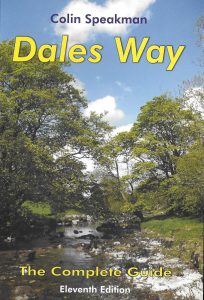
The Dales Way 11th Edition by Colin Speakman

The walk celebrated the original public walk organised over fifty years ago to inaugurate the 81 mile long Dales Way. The Dales Way is now one of England’s most popular long distance walks, connecting the towns and cities of West Yorkshire with the Yorkshire Dales and the Lake District. The 50 Year Anniversary walk went along the banks of the River Wharfe from the start of the Dales Way in Ilkley to Bolton Abbey in the Yorkshire Dales National Park.

Colin, a founder member of Gritstone Cooperative and now the Chairman of the Dales Way Association, and Vice President of both the West Riding Ramblers and the Yorkshire Dales Society, said it was “his privilege to have been able to lead the original walk on March 23rd 1969 and now the Golden Jubilee walk just over 50 years later”.

On their return to Ilkley, walkers joined Sir Rodney Brooke, President of the Ilkley Manor House Trust and Ilkley & Keighley MP John Grogan, for the official opening of a special exhibition dedicated to the story of the Dales Way.

Mr Grogan paid tribute to the vision and energy both Colin Speakman and Tom Wilcock of the West Riding Ramblers Association who had conceived and developed the route in 1969 as a way of encouraging access to the spectacular countryside of the Yorkshire Dales so close to the cities such as Leeds and Bradford. 

The free Dales Way 50th exhibition is open on weekends at the Ilkley Manor House until September 1st (see www.ilkleymanorhouse.org full for opening times and directions).

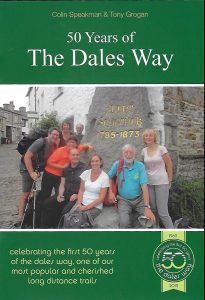
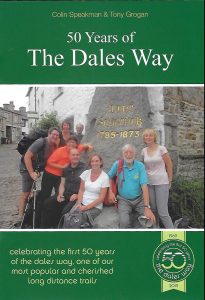
Supported by the Yorkshire Dales National Park Sustainable Development, Fund, the Dales Way Association has also published a special illustrated souvenir booklet 50 years of the Dales Way Priced at £4.99 it is available by contacting Colin, at the exhibition or can be obtained post free via the Dales Way Association www.dales way org.

Colin’s most up to date guidebook of the Dales Way, now in it’s 11th Edition, is also available from Gritstone.

Posted on

Gritstone author wins prestigious OWPG Book of the Year award

Outdoor Book of the Year award announced

Andrew Bibby’s captivating insight into southern English landscapes, Back Roads through Middle England (Gritstone Publishing, £13.95), has won the Outdoor Book of the Year award.

The award was announced on Saturday October 13, at the Outdoor Writers and Photographers Guild awards ceremony.

Andrew Bibby, who is an experienced professional writer who has contributed over many years to the British national press, has written several highly commended books on the countryside and the outdoors. His latest book delves deep into the landscapes of ‘middle England’, the book using the device of a journey he made by bicycle along the belt of Jurassic limestone (sometimes described as cotswold stone) from west Dorset to north Lincolnshire.

In the process of his journey Bibby turns to a wide range of disciplines, including social history, economics, and literature, to help him try to understand why the countryside looks the way it does.

Among other things, his book discusses how the countryside today is shaped by land ownership and estate management, and by changing nature of agricultural subsidies. Bibby looks at the efforts taken by residents in villages along his route to maintain community life in rural areas, and at conflicting responses that are emerging to the call for more housing in greenbelt areas. He suggests that the southern English countryside is at the same time both an old landscape and one which has seen radical change in relatively recent times.

Andrew Bibby says: “I am naturally delighted that Back Roads through Middle England has been awarded this year’s prize as Outdoor Book of the Year. This is a particular honour for me, because the award is made by my peers, fellow outdoor writers and photographers who understand the countryside and who care deeply about it.

“At a time when Englishness and English identity is increasingly an uncertain affair, my book looks for the clues that I believe are to be found in both the past and the present state of the English countryside to help us understand where we are today.”

Back Roads through Middle England is distributed to the trade through Cordee (www.cordee.co.uk) Review copies are available to journalists from info@gritstone.coop. Andrew Bibby can be reached on 01422 844026.
Posted on

Sedgwick biography book launch

Gritstone member Colin Speakmans’s highly regarded auto-biography of the Yorkshire Geologist and Dalesman, Adam Sedgwick, has just been re-released in a joint publication between Gritstone Co-operative and the Yorkshire Geological Society.

At the book launch, held at the Dales Countryside Museum, Hawes, and co-hosted by both the Yorkshire Geological Society (Andy Howard, President) and the Yorkshire Dales National Park Authority (Ian McPherson Deputy Chair.

In the welcome speech Ian McPherson said:  “This book is a jewel.  It’s a something rare for a book about geology – a great read,  a real page turner.”

There was also a talk by Dr Nigel Woodcock of Cambridge University about how Sedgwick was inspired by the geology and landscape on his walk to school, and how his observations and interpretations of the local geology have stood the test of time, followed by a Geological Trail walk lead by Dr John Knight  of the Yorkshire Geological Society.

Posted on

Paypal has changed its terms…

It seems Paypal has changed the way it works – and not for the better for some of our customers.

Previously you didn’t have to have a Paypal account to be able to use the Paypal system to pay by credit card.

Now it seems they only give you 10 credit card transactions before requiring you to register for an account with them.

We’ve had a few enquiries from customers who do not wish to have a Paypal account as what alternative means of payment we can offer.

It’s difficult as there is no alternative as cost effective for a small coop like ours.

However, just a quick reminder that we can still accept cheques posted with an order to our head office address. (It will obviously take much longer to fulfil the order though as we need to wait for the cheque to be collected (which isn’t every day) banked and cleared before sending any items). But it’s a stopgap while we consider if there are any viable alternatives.