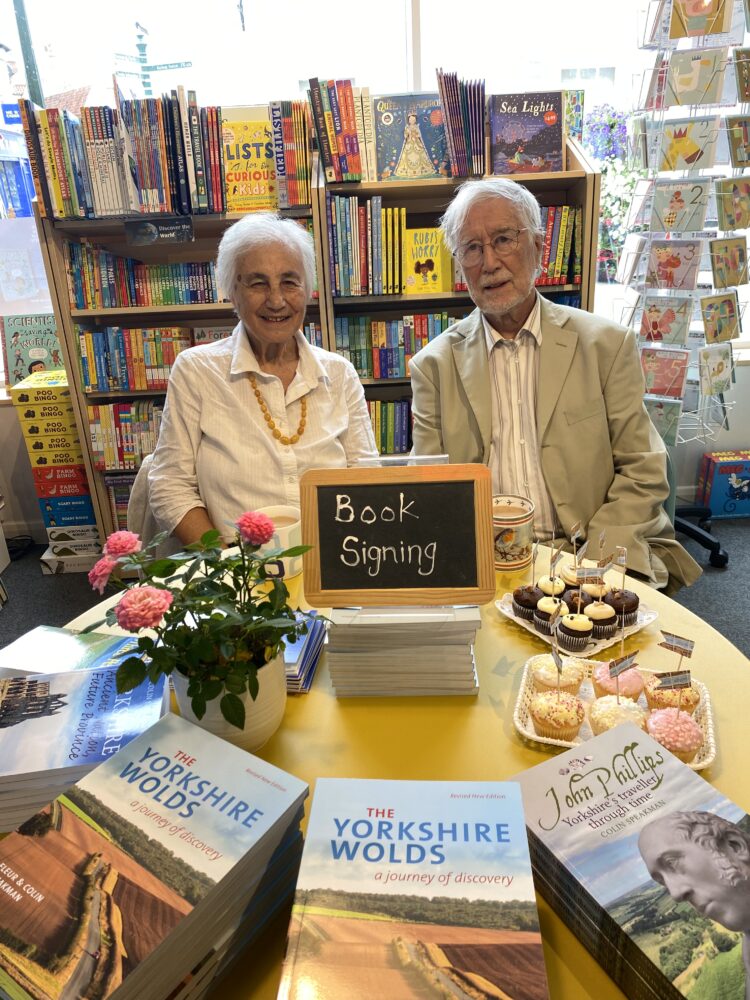
“Fleur and Colin travelled to the historic town of Beverley, on the edge of the Yorkshire Wolds, to launch the second edition of their book The Yorkshire Wolds A Journey of Discovery. The new edition of this acclaimed book has been planned to coincide with the work by Natural England to consider designation of the Yorkshire Wolds as an Area of Outstanding Natural Beauty. This year is also the 40th anniversary of the Yorkshire Wolds Way National Trail.
“The book was officially launched by Councillor Jane Evison, Portfolio holder for Tourism for East Riding of Yorkshire Council, at the Treasure House in Beverley, followed by a book signing in the excellent Beverley Bookshop – complete with cakes and roses. If you can’t get to Beverley for your signed copy of this limited edition, you can order it through the Shop part of this website (click here: Yorkshire Wolds Edition 2), price £15 post free.”
The views expressed in this post are those of the contributor and do not necessarily represent the views of all members of the Gritstone co-operative.
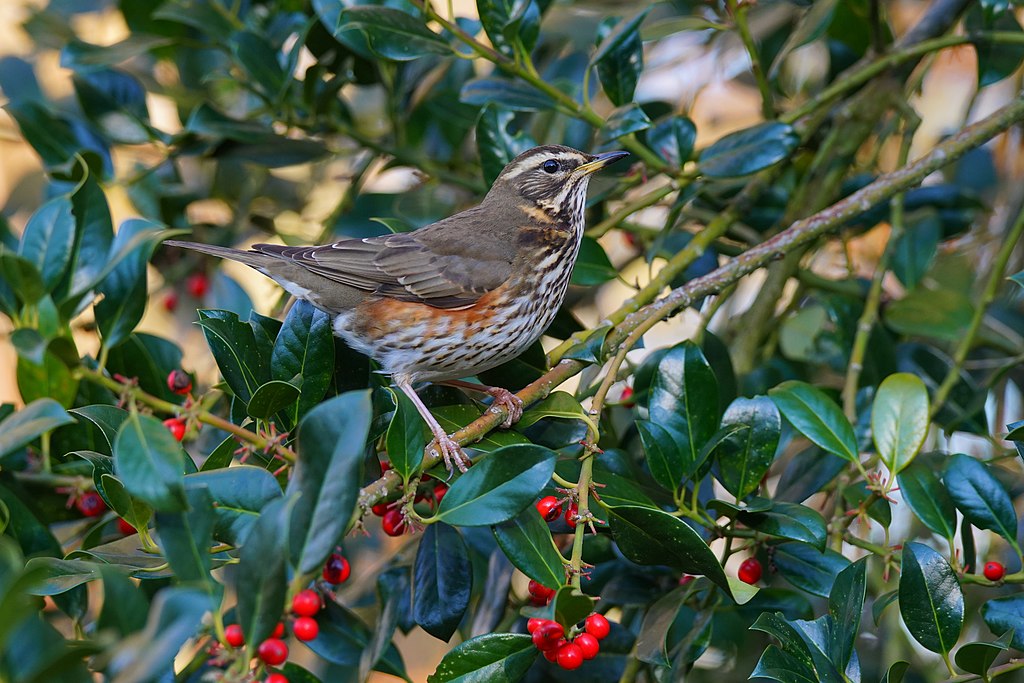
On the first full day of spring, 21 March, as I made my very slow way through a small tract of woodland a few hundred yards from home, I heard what I have decided is the most equinoctial of bird sounds. Not the song of the chiffchaff, although that is usually the first summer migrant back, and sure enough, there were a few keeping time with their piercing quaver beats. Nor any of the birds laying early claim to their few acres of territory, of which there were several: goldcrests, great tits, mistle thrushes and blackbirds.
The views expressed in this post are those of the contributor and do not necessarily represent the views of all members of the Gritstone co-operative.
If Coronavirus has taught us one thing, it is the enormous value of the natural world, and our access to it. Just over 70 years ago the great 1949 National Park and Access to Open Country legislation opened the way to the great National Parks of England and Wales, access to many of our finest areas of uplands, the setting up of National Nature Reserves and the long process of recording the precious networks of public rights of way on Definitive Maps for every county in England and Wales. The paths and open public access areas have been a lifeline for many millions of people and undoubtedly saved the NHS many billions.
The views expressed in this post are those of the contributor and do not necessarily represent the views of all members of the Gritstone co-operative.
At one minute to four in the afternoon, on Tuesday 21 December, the sun (sol) appeared to be stationary (sistere) for a moment, having reached the farthest point south in its declination, hovering, so it would appear, over the Tropic of Capricorn. The exact moment means little, but for those of us observing from northerly latitudes, the day itself is significant: the last of the days to be shorter than the previous one, following the last of the nights to have grown longer than the one before.
The views expressed in this post are those of the contributor and do not necessarily represent the views of all members of the Gritstone co-operative.
You might remember the story about the launch of our book about parkrun, back in the spring during lockdown, when a relay of runners carried a copy all the way from Windermere to London.
Since then, a copy of How parkrun changed our lives, by Eileen Jones, has been on a journey of its own. When parkruns started again in July, Eileen took a copy to her home run at Fell Foot in the Lake District, and gave it to a couple of parkrun tourists who were visiting…and were planning to run in Plymouth the following week.
They took the book with them and, having signed and dated it, with the name of the event they were at, they passed the book to another parkrun tourist. And so on. For five months the book has been on a journey, from Plymouth back up north via Oswestry among other places, all the way to Halifax, back to the Midlands, and was last heard of heading to Hull.
Eileen keeps track of its progress through posts on a Facebook page set up when the Bookrun Relay was being organised. And now another copy of the book has begun another journey – across the USA.
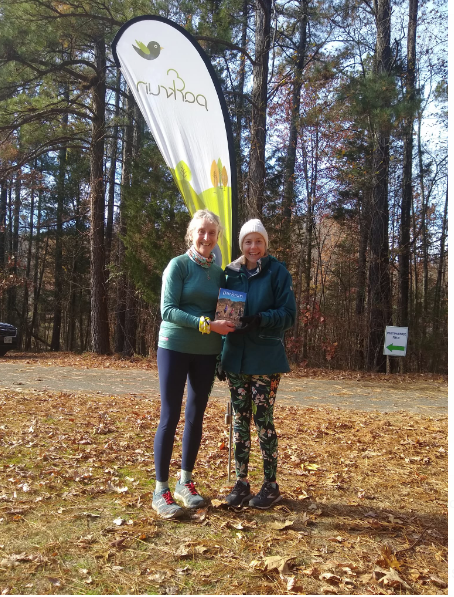
This one was signed by parkrun founder Paul Sinton-Hewitt when the relay runners met for a reunion this autumn at Beacon parkrun in Lichfield, the mid-way point of the original relay. It was then taken by Macclesfield runner Eve Taylor and her husband Ian on holiday to America, and has been presented to Nicole Brown, the event director at Deep Park parkrun in Richmond, Virginia, who, after reading it herself, will pass it on to another parkrun tourist.
A further copy of the book is also now in the USA, a gift from Eileen to a runner from Seattle, Martha Hankins, whom she met at Newborough Forest parkrun on Anglesey in October.
Eve Taylor presents a copy of the parkrun book to Nicole Brown in Richmond, Virginia.
Meanwhile, Eileen was invited to speak about the book at the Kendal Mountain Festival at the prestigious Merrell Running Session. “I was a little unsure about my credentials to be there, as most of the other speakers seemed to run more in a day than I do in a month. But the story of the parkrun community, and its ethos of inclusivity, seemed to be appreciated.”
Climber Rob Greenwood, who is chair of the Peak area of the British Mountaineering Council, wrote in a review for UK Hillwalking: “A particular highlight, in and amongst the many, was Eileen Jones’ account of ‘How Parkrun Changed Our Lives’. I’ve never actually done a parkrun before, and only learned exactly what one is during the session, but the sense of belonging Eileen described, and to such a wholesome community, filled my heart with joy.”
Eileen Jones talking at the Kendal Mountain Festival.
At the end of her talk, Eileen issued a challenge to the following speaker, the legendary fellrunner Joss Naylor, who is now 85. She pointed out that though he’d done everything there was to achieve in the running world, he had never yet done a parkrun. The challenge was accepted. Joss has registered, downloaded his barcode, and is hoping to run with Eileen at a Cumbrian parkrun before the end of the year.
Eileen’s book, and ALL the books by Gritstone authors, can be ordered from our website here in plenty of time for Christmas – in case you were struggling to think of ideas for gifts!
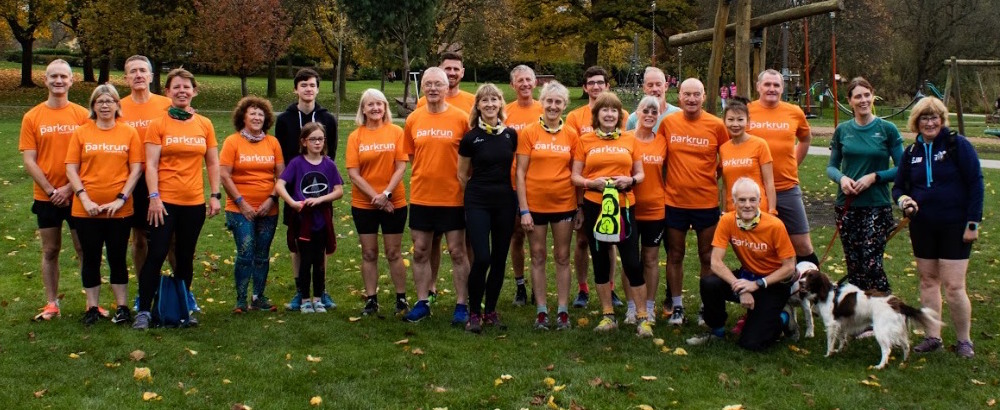
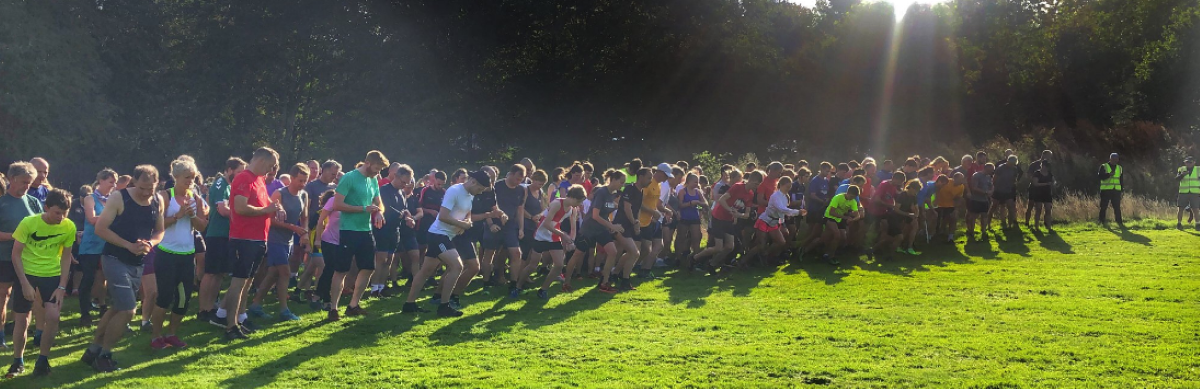
Main Photo: Some of the relay runners who met for the first time at Beacon parkrun
Gritstone author Colin Speakman won the Golden Eagle award for Outstanding Services to the Outdoors at the meeting of the Outdoor Writers and Photographers Guild this weekend.
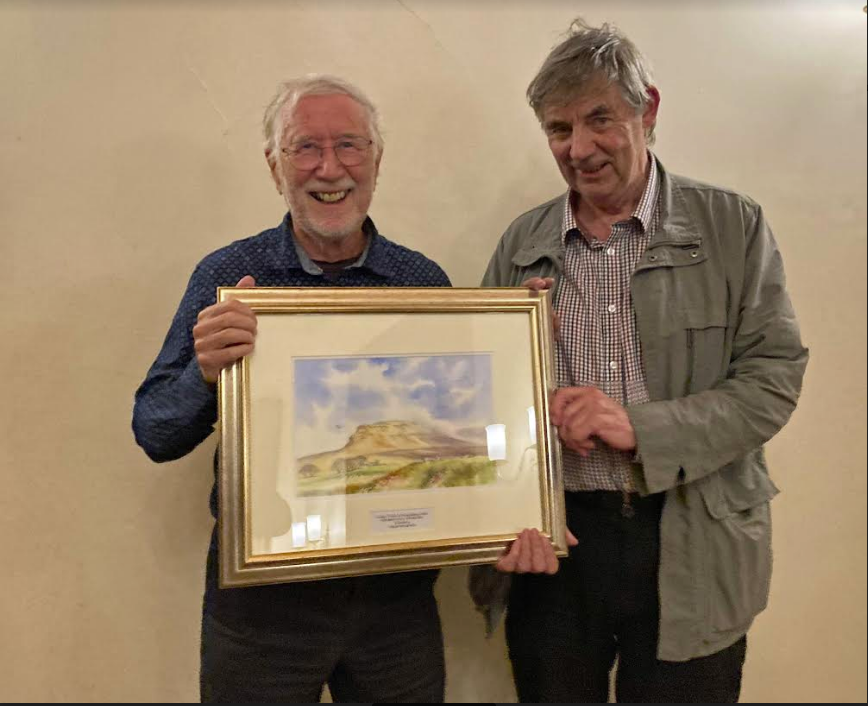
Colin is a prolific writer, environmentalist, academic and broadcaster. He was presented with a specially commissioned painting of Pen-y-ghent by the artist and environmentalist, David Bellamy.
A co-creator of the Dales Way, now 50 years old and one of the most popular long distance paths in the country, Colin has written nearly 60 books, covering walking and history, transport guides, biographies, poems and fiction. He has recently been described as one of 20 of Britain’s all-time “Walking Heroes”.
His recent publication was a biography of John Phillips, the influential 19th-century Yorkshire scientist who completed the first detailed geological surveys of the Yorkshire Coast and the Yorkshire Dales and who helped establish the British Association for the Advancement of Science.
Gritstone Publishing is Britain’s first publishing co-operative run by authors. Gritstone specialises in publishing non-fiction and fiction titles relating to the landscape and the countryside. Its seven members are all experienced outdoor writers and journalists.
Caption: Colin Speakman with artist David Bellamy and his award
*Trade distribution of Colin’s new Yorkshire book: Cordee Ltd, 11 Jacknell Rd, Dodwells Bridge Industrial Estate, Hinckley, LE10 3BS, 01455 611185 and sales@cordee.co.uk
The views expressed in this post are those of the contributor and do not necessarily represent the views of all members of the Gritstone co-operative.
The world is a very different place now, than it was two years ago. Who would have thought then that a week’s holiday in the Lake District would cost more than a trip to Italy, for example. That was the finding of a study by the consumer group Which? after accommodation prices soared in “staycation hot-spots” following the global pandemic.
Hotel and guest-house owners justified their increases after losing billions during the 2020 season because of Covid-19. Though it was self-catering and private accommodation providers who saw the greatest increases in both demand and prices this summer, across all of the UK’s holiday areas.
The views expressed in this post are those of the contributor and do not necessarily represent the views of all members of the Gritstone co-operative.
If you wanted to define the single most serious threat to the health, welfare and well-being of future generations of people living in Yorkshire, it would not be Covid-19, terrorism, nuclear weapons, a crashing economy, but something that impinges on all these things – climate change.
We now know from the evidence of the world’s leading scientists, that the world is now approaching a critical point.
The views expressed in this post are those of the contributor and do not necessarily represent the views of all members of the Gritstone co-operative.
Launching a book used to be a straightforward affair. The publisher would advertise an event at a bookshop, the author would make an informal speech, answer a few questions, sign a few books, offer a few glasses of wine.
Now while there are still no “non-essential” retailers open, (how can books be considered non-essential?) it’s necessary to think outside the box, outside the bookshop.
The views expressed in this post are those of the contributor and do not necessarily represent the views of all members of the Gritstone co-operative.
In the summer of 2020 I began swimming (I decline to add the unnecessary prefix ‘wild’ because, as my Aussie friend always points out, it is after all just swimming) in a whole series of new places. Until then I’d assumed there were only two good open water swimming spots in the valley, both of which had become overrun long before Covid-19. I went in Gaddings Dam occasionally early or late in the day or the season, but never on a hot day in summer, and I had long since abandoned the dark hole of Lumb Falls to the local kids bombing from the top of the waterfall. Soon after the first lockdown ended I heard whispers of other disused dams where you could swim, and, in the heat of late spring, was eager to end as many runs as possible at these sites. They were wonderful oases, where you could change quietly alone and slip into the undisturbed water.
The views expressed in this post are those of the contributor and do not necessarily represent the views of all members of the Gritstone co-operative.
For several years tourism chiefs have been promoting the notion of the ‘staycation’ to entice holidaymakers to take a break in the UK, notably in national parks. Alongside this sat the green lobby’s lower-carbon-footprint call for us to fly less.
Be careful what you wish for. Last summer nobody could fly anywhere, and once the first lockdown restrictions were eased, the Lake District in particular experienced a veritable invasion of staycationers.
The views expressed in this post are those of the contributor and do not necessarily represent the views of all members of the Gritstone co-operative.
It has become a commonplace that when the coronavirus pandemic finally ends, hopefully through mass vaccination of the UK population, Britain has the rare opportunity to become a greener society, one in which a respect for and understanding of the natural world will become a major driving force.
Some conception of how this might be achieved lies within the pages of Gritstone author Laurence Rose’s inspiring new book Framing Nature*, which explores the complex relationship between people and wildlife and how much we can benefit by understanding and respecting the natural world around us that ultimately we all depend on for our very existence.
The views expressed in this post are those of the contributor and do not necessarily represent the views of all members of the Gritstone co-operative.
It’s been an extreme year for running. Deprived of races on the fells and trails, ultra athletes have been smashing the records with jaw-dropping regularity. The Pennine Way fastest time was beaten twice in two weeks. There was a new women’s record for the Bob Graham round in the Lakes; the record for the Steve Parr round (all the Lakeland fells over 2500ft) went at last after 30 years; and jogging from Land’s End to John o’Groats seemed to be the new normal.
But behind the high-profile, long distance achievements, millions of people were mourning the absence of their 5k Saturday morning parkrun.
The views expressed in this post are those of the contributor and do not necessarily represent the views of all members of the Gritstone co-operative.
It is, of course, excellent news that a local community campaign has found the wherewithal to raise £3.8m to buy around 5000 acres of the Langholm moorland estate in southern Scotland from the Duke of Buccleuch. Langholm follows several other examples in Scotland where community endeavour has successfully brought former privately-owned estates into community ownership.
The views expressed in this post are those of the contributor and do not necessarily represent the views of all members of the Gritstone co-operative.
The pandemic has forced many people to look at new lifestyle choices, including different ways of travelling. If air travel has suffered a massive (temporary) decline, so has public transport usage. Car travel on the other hand, is almost back to normal – lower in city centres as people abandon the daily commute but maybe even above normal levels in rural areas and country towns.
People are, however, cycling and walking more frequently – at least while the weather is fine and days are long.
The views expressed in this post are those of the contributor and do not necessarily represent the views of all members of the Gritstone co-operative.
On 20th March 2020, every pub in Britain was forced to close their doors. Barrels of beer were poured away, staff laid off and bookings cancelled. Fifteen weeks later they re-opened, rather warily, but now with table service, one-way systems and sanitising stations. Latterly a 10pm curfew was introduced; and as I write they’re beginning to be closed again.
The views expressed in this post are those of the contributor and do not necessarily represent the views of all members of the Gritstone co-operative.
There’s something very sad about an elderly Interpretation Board.
I took a walk the other day along the route of the old canal into Halifax town centre, now a footpath and cycleway and (despite the relics of nineteenth century industry all around) a remarkably green and pleasant stroll. There was something about the way the route had been built which very firmly said Manpower Services Commission to me. Certainly the state of the interpretation boards, hard to read but still in place, suggested a venture dating back to those days of employment creation in the 1980s.
The views expressed in this post are those of the contributor and do not necessarily represent the views of all members of the Gritstone co-operative.
With the sudden influx of visitors to the countryside as Lockdown eased, a hoary old myth has been allowed to re-appear, suggesting that the current problems are part of a rural/urban divide – an invasion of “townies” into the protected rural paradise enjoyed by locals.
The idea that people who live in towns are different from those who live in the countryside is as false now as it has ever been, but even more so in our time of almost universal rural motorised mobility.
Kate Ashbrook, Guest Contributor (Please see footnote for more information about Guest Contributors).
The views expressed in this post are those of the contributor and do not necessarily represent the views of all members of the Gritstone co-operative.
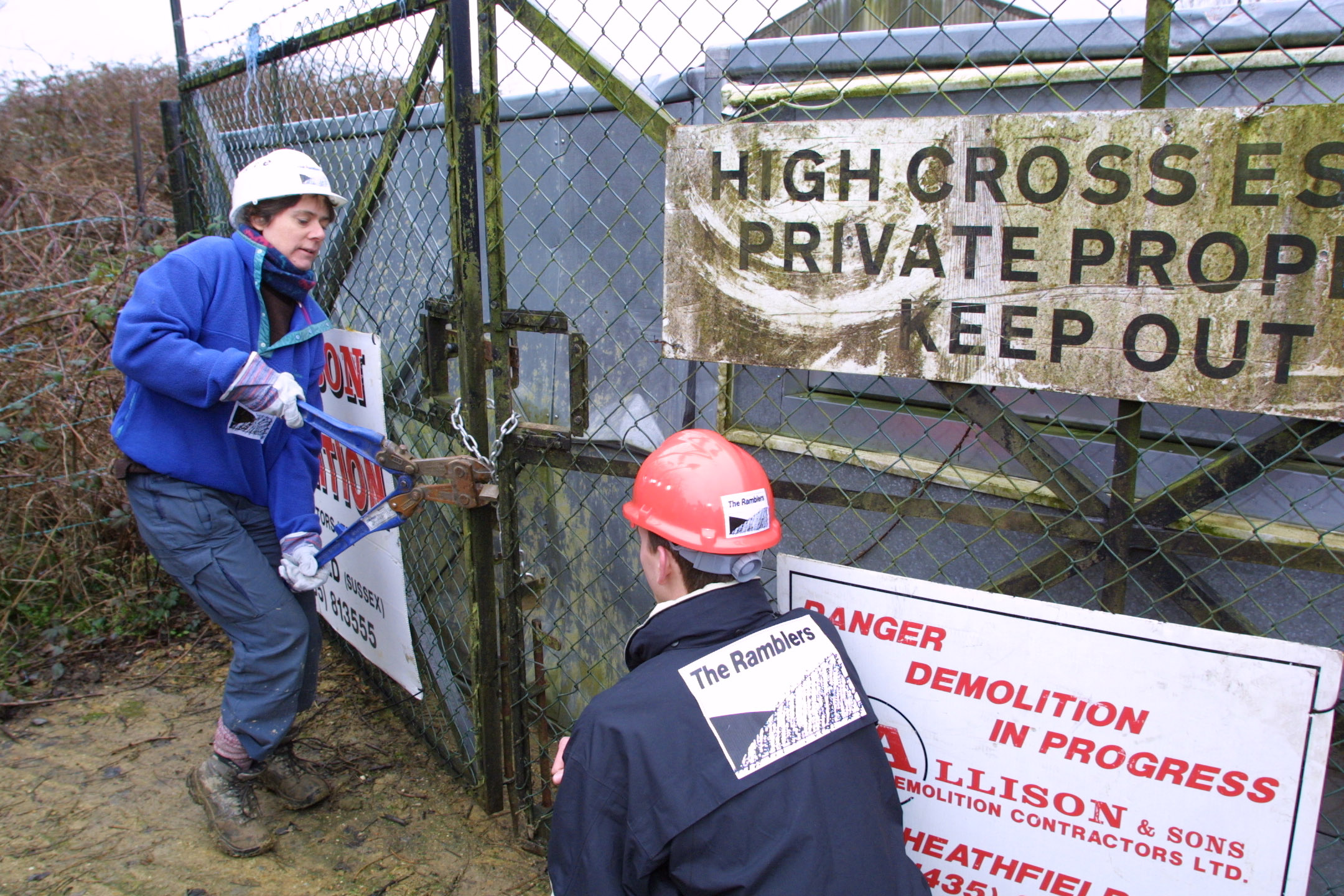
Lots of people have discovered their local paths during lockdown. But few of them are likely to know how those paths were won and how they are still defended.
Their walks would be greatly enriched if they knew the effort that went in to securing the path network we enjoy today.
To share your thoughts, please go to the individual blog post you wish to comment on (by clicking on the post title). You will then find a comments form at the bottom of the post.
Please note, to prevent the blog becoming a spam magnet, all comments are moderated (so it may take a little time for your comment to appear) and comments are automatically closed once the post is no longer reasonably new.
We use cookies to optimize our website and our service.
Functional
Always active
The technical storage or access is strictly necessary for the legitimate purpose of enabling the use of a specific service explicitly requested by the subscriber or user, or for the sole purpose of carrying out the transmission of a communication over an electronic communications network.
Preferences
The technical storage or access is necessary for the legitimate purpose of storing preferences that are not requested by the subscriber or user.
Statistics
The technical storage or access that is used exclusively for statistical purposes.The technical storage or access that is used exclusively for anonymous statistical purposes. Without a subpoena, voluntary compliance on the part of your Internet Service Provider, or additional records from a third party, information stored or retrieved for this purpose alone cannot usually be used to identify you.
Marketing
The technical storage or access is required to create user profiles to send advertising, or to track the user on a website or across several websites for similar marketing purposes.