Colin Speakman
The views expressed in this post are those of the contributor and do not necessarily represent the views of all members of the Gritstone co-operative.
If Coronavirus has taught us one thing, it is the enormous value of the natural world, and our access to it. Just over 70 years ago the great 1949 National Park and Access to Open Country legislation opened the way to the great National Parks of England and Wales, access to many of our finest areas of uplands, the setting up of National Nature Reserves and the long process of recording the precious networks of public rights of way on Definitive Maps for every county in England and Wales. The paths and open public access areas have been a lifeline for many millions of people and undoubtedly saved the NHS many billions.
The 1949 legislation also set up what were to eventually become 46 AONBs in England and Wales. And also in Northern Ireland. Unlike National Parks, AONBs are managed by local authorities and have never had the same degree of funding for education or visitor management, though in most cases their record for landscape protection under existing planning legislation has been excellent.
However the 2019 Glover Report also suggested that they should and could have a much stronger and proactive role in promoting quiet forms of outdoor recreation, especially to less affluent urban communities including to ethnic minorities and people of BAME backgrounds. Glover also suggested that the Government agency responsible, Natural England should also consider future designations.
To the delight of many people in East Riding, the Yorkshire Wolds has been added to the list of possible new English Areas of Outstanding Natural Beauty (AONBs). There are already two very successful ones in Yorkshire – Nidderdale and the Howardian Hills, plus part of the Forest of Bowland (most of which was in historic Yorkshire).

It has long seemed an absurdity that the equally fine Lincolnshire Wolds have been an AONB since 1973, covering as they do 558 square kilometres (216 square miles) of north east Lincolnshire.
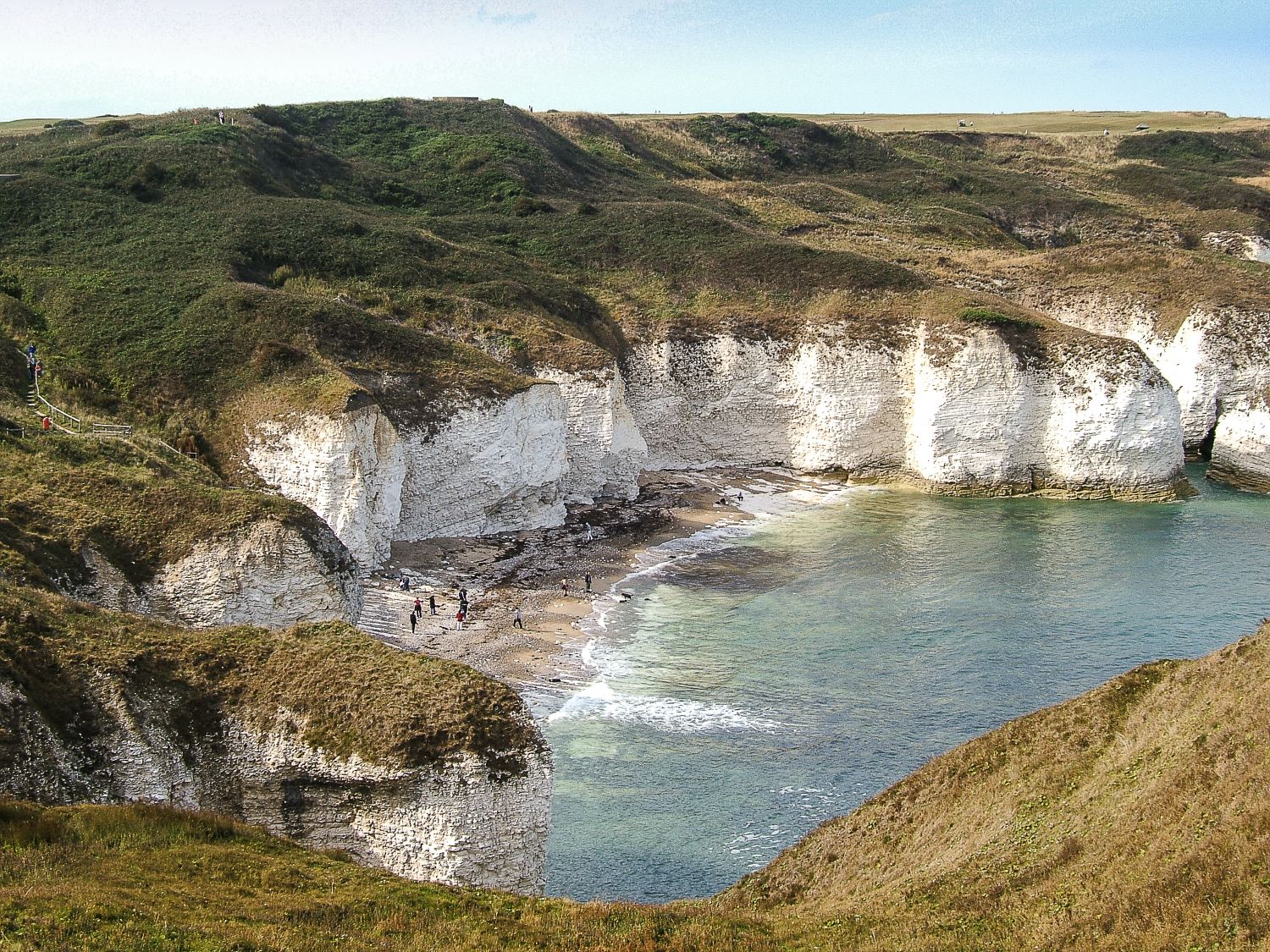
The Yorkshire Wolds, geologically very similar is, if anything even finer, with a spectacular coastline that includes Flamborough Head and Bempton Cliffs RSBP Reserve, and the wonderful dry green valleys of the High Wolds, as well as some superb villages and surrounding traditional market towns.
It is also a region whose landscapes have been brought into national awareness by David Hockney, England’s greatest living artist, with his amazing oil paintings, water colours and i-pad drawings of the Yorkshire Wolds at contrasting seasons of the year.
AONB designation would help bring new forms of sustainable tourism to the area, which is too little known as magnificent cycling, horse riding and walking country. But above all it would protect a very beautiful landscape, stunning villages, some with vernacular features such as traditional barns and even a lighthouse built with chalk, and wildlife habitats such as those around Thixendale so perfectly captured by Wolds wildlife artist and film maker Robert Fuller. AONB status will also protect local cultures and ways of life and should be welcomed by these communities.
Another major achievement of the 1949 Act was the establishment of Long Distance Footpaths, now known as National Trails. One of Britain’s least known but in fact very spectacular route is the Yorkshire Wolds Way, first designated in 1971 as the Wolds Way but perhaps too little known. Even less well known perhaps is the fact that the 2000 Countryside and Rights of way Act opened up many magnificent dry valleys as spectacular walking routes, linking with the otherwise relatively sparse rights of way network. This has made the Yorkshire Wolds even better walking country.

But even for those living in Yorkshire, the Yorkshire Wolds is a poor relation to the Dales, Yorkshire Moors and even the South Pennines. On the other hand it is also a key recreation area for the great city of Hull, with its population of 320,000 for whom the nearby Wolds countryside is especially important. Hull has suffered particularly badly during the pandemic because of the nature of many of its industries.
With areas like Bolton Abbey, Malham, and the Three Peaks suffering from horrendous traffic congestion as a result of staycation holidays and a rush back to the perceived safety of the car, the Wolds are relatively quiet, with in the High Wolds valleys relatively few other visitors and ample space along several fine local recreational footpath routes. There is also a recently established Yorkshire Wolds Cycle route. This a 144 mile route along quiet lanes and bridleways, connecting the attractive towns of Beverley, Malton, Driffield and Bridlington.
AONB status will only be granted after extensive consultation with farmers, landowners and local communities as well as local authorities such as East Riding Council who have long supported such a designation. The actual boundaries will have to be determined, but are likely to include most of the great chalk upland ridges and dry, grassy valleys or “Dales”.
As and when consultations start to occur, it will be important for everyone who cares for our northern countryside, particularly those who walk or cycle or ride in the Wolds area, to be directly involved in the debate. But it will be also important to help the local authorities and support, with factual evidence and research, the case to prove why the Yorkshire Wolds deserves additional protection. Until Government policies changed, wind turbines on the high chalk ridges were a major landscape threat, as is the increasing industrialisation of farming.
A further form of this time, international heritage protection, is also under active consideration in the Yorkshire Wolds and that is because of its rich, possibly unique, geological heritage, being among the most northerly outcrops of chalk in western Europe. Many of the chalk streams are rich in aquatic wildlife interest. Of special geological are not only the chalk hills and dales but particular features such as the unique Great Wolds Valley between Wharram-le Street and Bridlington. This would be an UNESCO Geopark, but would also include such remarkable areas as Holderness, under which the chalk strata continue well into the North Sea, and the marine environment beyond. The Geopark would extend beyond the possible AONB boundaries to include such as remarkable features as Spurn Point, Hornsea Mere and even part of the Vale of Pickering, a former great glacial lake. But AONB status would be the first major step in recognising and protecting the natural and cultural heritage of this very special part of Yorkshire
Header image: “Flamborough Head” © Dorian Speakman
