Posted on

Authors’ co-operative celebrates 10 years

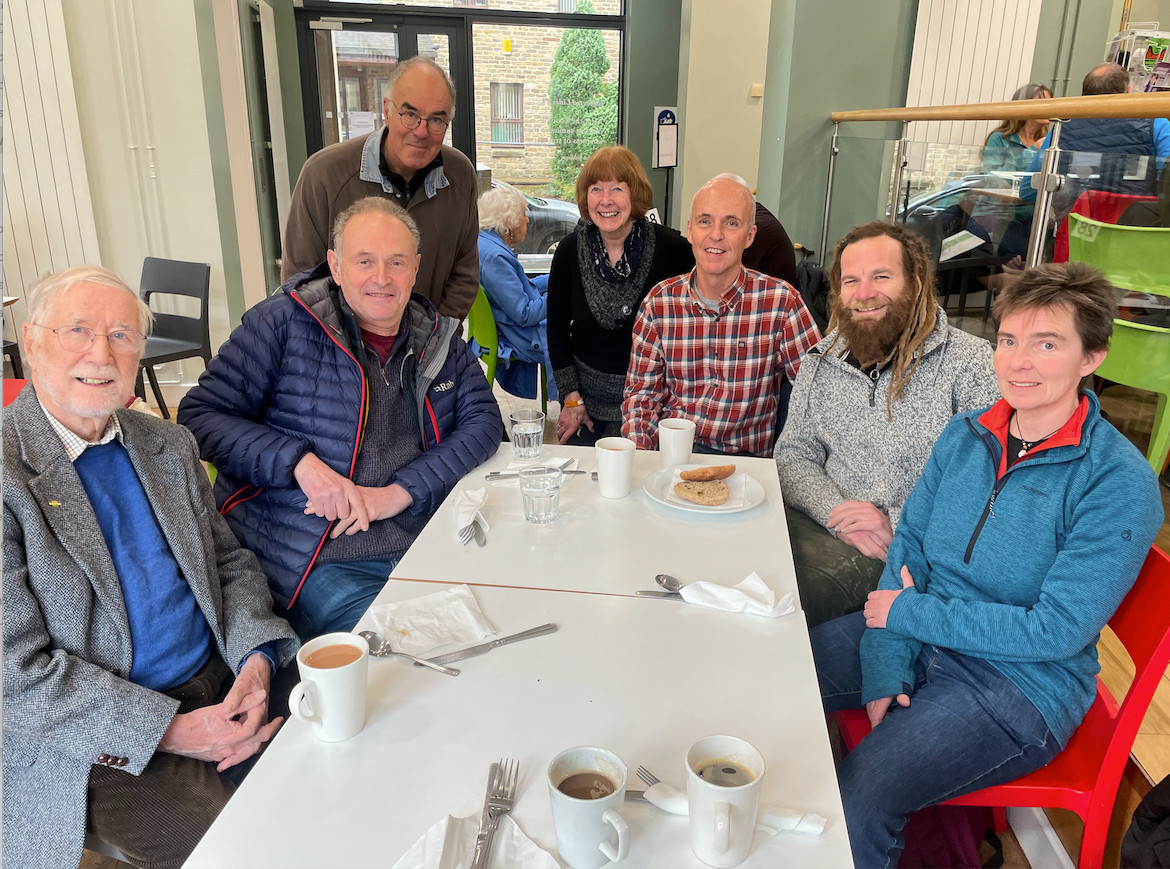
in the canteen at Hebden Bridge town hall. All seven members (at the time) of Gritstone sitting around dining table during lunch, all looking at camera

Andrew Bibby

Gritstone Publishing, still the only author-run co-operative publisher in Britain, is turning ten years old in 2026.

Image of walkers on a rocky mountainside

Established by four member-authors looking to assert more control over how their books were brought to market, the co-operative has grown and is now nine-strong. The most recent author to join is Mike Raine, a mountaineering instructor and author of the leading handbook on mountain craft. Gritstone titles are strongly rooted in a sense of place, with a particular focus on the north of England.

Front cover image of English Coast Path Book 2 - South West Coast

Gritstone will be marking its tenth birthday by bringing out this summer the final two volumes to complete a comprehensive set of guidebooks to the English Coastal Path, the longest and most ambitious of the country’s long-distance national trails. These compact but lavishly illustrated books, from cartographer Chris Goddard, are currently the only published guides for walkers. The 2026 titles, on the Northern and Eastern sections of the path, will join the South and South-West volumes already published.

Also scheduled for publication in 2026 is fellow Gritstone member Eileen Jones’s tribute to William Wordsworth’s home Rydal Mount in the Lake District, where the poet lived for most of his life. The book has received support and co-operation from current members of the Wordsworth family who have owned the house for nearly 60 years.

Also among the list of Gritstone titles in the coming year will be Mike Raine’s new book Just One More Hill on the growing popularity of ‘bikepacking’ (cycle touring), and a newly revised edition of The Long Spring by conservationist and former RSPB Director for Northern England Laurence Rose. The Long Spring was described by The Spectator when it was first published in 2018 as an “inspiring, eye-opening read”.
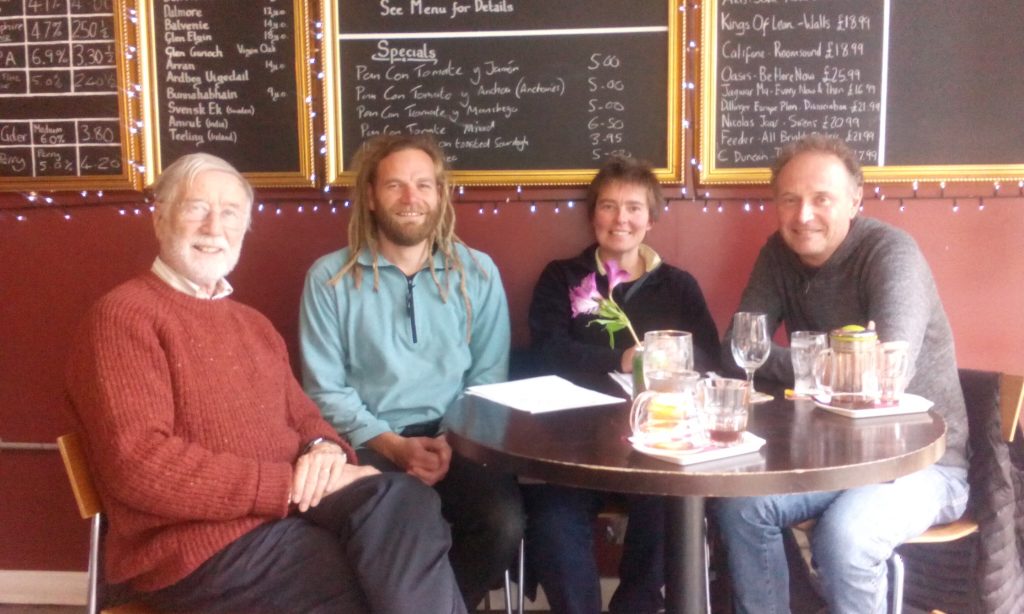
Image of the first four members of the cooperative, sat around a table
Founder members at the inaugural meeting 14 October 2016

Gritstone, as a fully mutual co-operative, is controlled collectively by its nine member-authors who discuss and agree proposed new titles for the imprint. Book distribution to the book trade, including bookshops and online retailers, is handled by a mainstream trade distributor, but Gritstone titles are also sold directly from its own website. Gritstone has recently been accepted as a member of the Independent Publishers Guild.

Andrew Bibby, one of Gritstone’s founder members, explained: “After ten successful years of trading and growth, we can definitely say that our publishing model works. The publishing industry has changed enormously in recent years to become much more marketing-led, and authors are increasingly missing out on a fair share of the rewards for their work. We enable our authors to have more control over the publishing process. Gritstone offers a third way between conventional publishing and author self-publishing.”

Also choosing to work through Gritstone as members of the co-op are the veteran countryside writer and campaigner Colin Speakman, national parks author and activist Andrew McCloy, Yorkshire novelist Mike Padgett, and author of walkers’ and cyclists’ guides Chiz Dakin.

Gritstone takes as its model the long-established concept of marketing co-operatives used for example by farmers and wine producers in many countries to collectively sell their produce. The idea has proved very adaptable for the publishing sector. Gritstone believes there is considerable scope for its model to be adopted by other professional writers and has announced that it will be happy to work with other authors considering their own co-operatives.
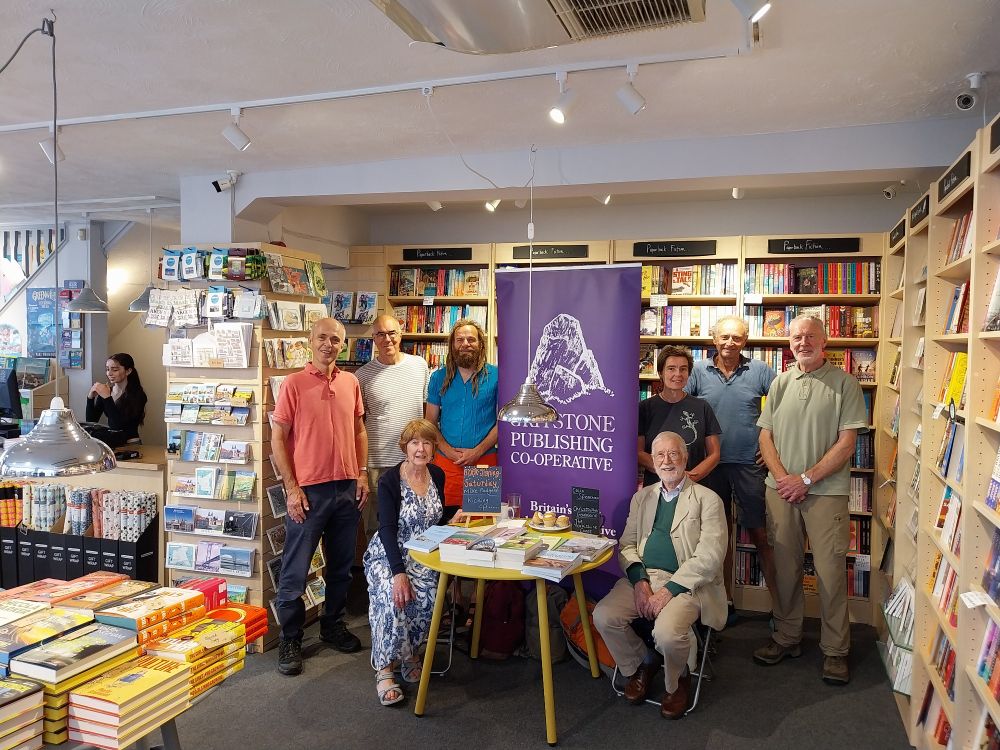
In a book shop, all eight members either standing or sitting in a semicircle in front of the Gritstone banner and behind a desk displaying books recently published by Gritstone
The Gritstone team of eight (as it was then, although we’re now 9!) at a recent book launch in Beverley

Gritstone itself is currently welcoming approaches from potential new members writing in its fields of interest (broadly conservation, landscape and the outdoors, but also including fiction rooted in northern settings), with a view to potentially expanding to twelve members.

Editors’ note: The Gritstone website: https://gritstonecoop.co.uk

Andrew Bibby 07989 965315
Posted on

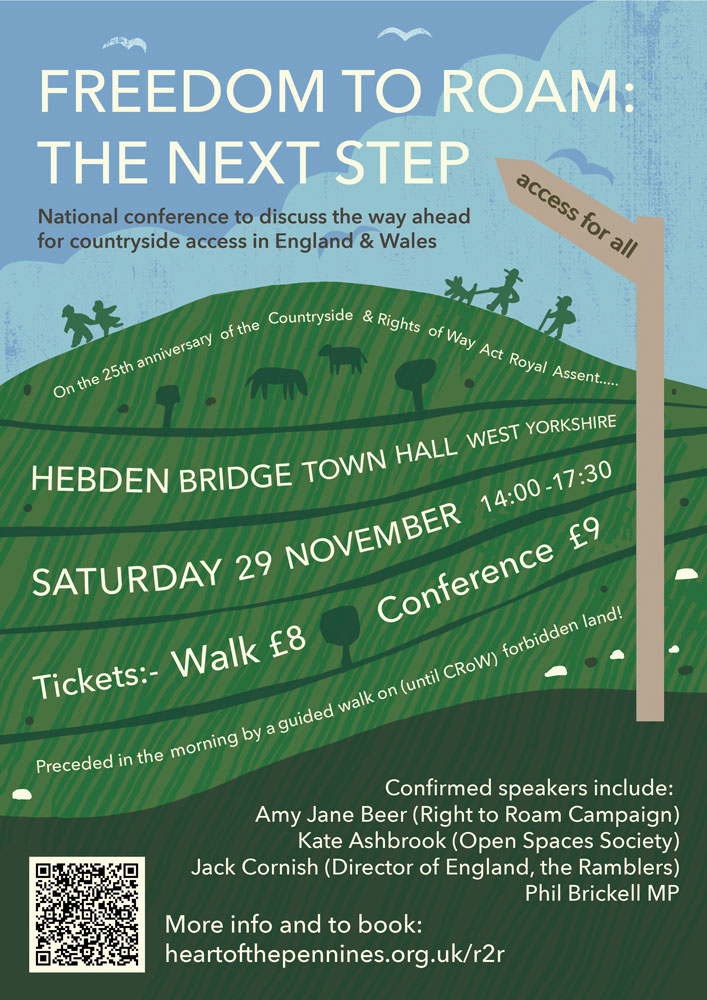
Campaigning for access 25 years after CROW

Gritstone author Andrew Bibby looks back on 25 years of campaigning for access since the Countryside Rights of Way Act came into being and ponders the next step in the Freedom to Roam process.

I moved to the south Pennines house where I still live today from inner-city Coventry more than thirty-five years ago. It was quite a contrast.  Instead of being woken in the small hours by the noise of a fight outside the nightclub across the dual carriageway opposite I got woken up by the sound of ducks and geese on the nearby Rochdale Canal. 

And of course there were now hills on my doorstep which I lost no time in getting to know.  Our beautiful moors have survived all that the Industrial Revolution could throw at them and have emerged the other side (almost) unscathed, even if the peat is more eroded than it should be and the water more acidic.

“Of course, there was always the option of tresspassing.”

But at the time when I moved north there was also a big frustration when it came to walking or running on the moorland: the ‘keep out’ signs which demarcated the land from which we were all excluded (unless we had paid to be there in the Autumn with our guns to try to bag as many brace of grouse as we could).  It meant, for example, that the highest land in my part of the Pennines, Boulsworth Hill, was out of bounds if I wanted to get there from my side of the Yorkshire/Lancashire border.  So too were impressive outcrops of millstone grit rocks, such as the Alcomden Stones, the Dove Stones and the Hare Stones. 

Continue reading Campaigning for access 25 years after CROW
Posted on

Going for a walk?  Have you taken your test?

Front Cover of Andrew Bibbys "The Borders: The Lands we Share" book

Andrew Bibby

The views expressed in this post are those of the contributor and do not necessarily represent the views of all members of the Gritstone co-operative.

Just as you need to have passed a driving test to handle a car, I propose that in future you’ll have to take a countryside test if you want to go out walking. It needn’t be too onerous. A practical element should be included, checking for example that you know to leave farm gates the way you found them and not to let dogs harry livestock. And then there would need to be a written test too. I imagine the questions for the English test could be something like this (Scotland and Wales would have slightly different questions): What do the letters ELM stand for in a farming context? And the letters SFI? Can you explain the difference between Mid-Tier and Higher-Tier?

Continue reading Going for a walk?  Have you taken your test?
Posted on

Taking back the land

Andrew Bibby

The views expressed in this post are those of the contributor and do not necessarily represent the views of all members of the Gritstone co-operative.

It is, of course, excellent news that a local community campaign has found the wherewithal to raise £3.8m to buy around 5000 acres of the Langholm moorland estate in southern Scotland from the Duke of Buccleuch. Langholm follows several other examples in Scotland where community endeavour has successfully brought former privately-owned estates into community ownership. 

Continue reading Taking back the land
Posted on

Bored with those boards

Andrew Bibby

The views expressed in this post are those of the contributor and do not necessarily represent the views of all members of the Gritstone co-operative.

There’s something very sad about an elderly Interpretation Board. 

I took a walk the other day along the route of the old canal into Halifax town centre, now a footpath and cycleway and (despite the relics of nineteenth century industry all around) a remarkably green and pleasant stroll. There was something about the way the route had been built which very firmly said Manpower Services Commission to me. Certainly the state of the interpretation boards, hard to read but still in place, suggested a venture dating back to those days of employment creation in the 1980s.

Continue reading Bored with those boards
Posted on

Is the ‘land issue’ back on the agenda?

Andrew Bibby

The views expressed in this post are those of the contributor and do not necessarily represent the views of all members of the Gritstone co-operative.

Sometimes we forget our history.  It wasn’t really so very long ago that the issue of land ownership and land taxation was one of the hottest of all hot political topics.  Lloyd George precipitated the most serious constitutional crisis of modern times when his ‘People’s Budget’ in November 1909 proposed a series of taxes on land value – and the House of Lords, packed with landowners, promptly voted it down. Cue an emergency General Election and, eventually, the compromise deal of the 1911 Parliament Act which rebalanced a little the powers of the two houses of Parliament.

Continue reading Is the ‘land issue’ back on the agenda?
Posted on

Grouse Grouse

Andrew Bibby

The views expressed in this post are those of the contributor and do not necessarily represent the views of all members of the Gritstone co-operative.

The heather is blooming in my part of the Pennines, which means that the guns will be out on the moors picking off the red grouse.

You can support grouse shooting on the grounds that it is a country tradition (although modern driven grouse shooting only developed in the nineteenth century, so it’s perhaps not all that traditional).

Continue reading Grouse Grouse
Posted on

Walk yellow

Andrew Bibby

The views expressed in this post are those of the contributor and do not necessarily represent the views of all members of the Gritstone co-operative.

Let me tell you the story of Cherry Tree Clough. That’s what I call it, although it also has the second, more workaday, name of Rowshaw Clough.

It’s a little wooded valley in the Yorkshire Pennines complete with a stream running through it, not very far at all from a very well-known Beauty Spot. (Capital letters are called for, I think: this is a stretch of country that has attracted visitors for over a century.)

Continue reading Walk yellow
Posted on

Funding the Countryside

Andrew Bibby

The views expressed in this post are those of the contributor and do not necessarily represent the views of all members of the Gritstone co-operative.

I was searching my way through Google a day or two back, researching the devastating effect of Right to Buy in rural areas (a topic, perhaps, for another day) when I came across a blog from the Campaign to Protect Rural England’s chief executive at the time when what became the Housing Act 2015 was first being discussed.

The blog included an interesting claim: “one senior Tory told me that no one has a right to live in a village any more than they have a right to live in Mayfair. Someone may have grown up in a village and work in it, but if they cannot afford to buy a house in it they should move to the nearest affordable town.”

Continue reading Funding the Countryside
Posted on

The countryside after Covid-19 – has anything changed?

Andrew Bibby

The views expressed in this post are those of the contributor and do not necessarily represent the views of all members of the Gritstone co-operative.

So has anything changed?  The English countryside is once again there to enjoy for all those who want. You can still walk, let’s say, from Wasdale Head up to Pillar, keeping fingers crossed that the clouds will be high and the Isle of Man visible across the water.  You can again stroll Ballard Down and around Old Harry Rocks, looking across to Poole Harbour and the Isle of Wight. You can hike to the Kinder Downfall, just like you could before Covid-19 came along to change a lot of people’s plans.

Continue reading The countryside after Covid-19 – has anything changed?