
Andrew McCloy
The views expressed in this post are those of the contributor and do not necessarily represent the views of all members of the Gritstone co-operative.
“An indescribable heap of filthy paper, empty fruit tins, broken bottles, cigarette and chocolate wrappers, matchboxes, cigarette ends and other litter.” This was how the Sheffield Daily Telegraph described what local schoolchildren, encouraged by the Sheffield & Peak District branch of what was then called the Council for the Preservation of Rural England (CPRE), had collected from Stanage in the Peak District one Bank Holiday. That particular litter pick took place in 1929*.
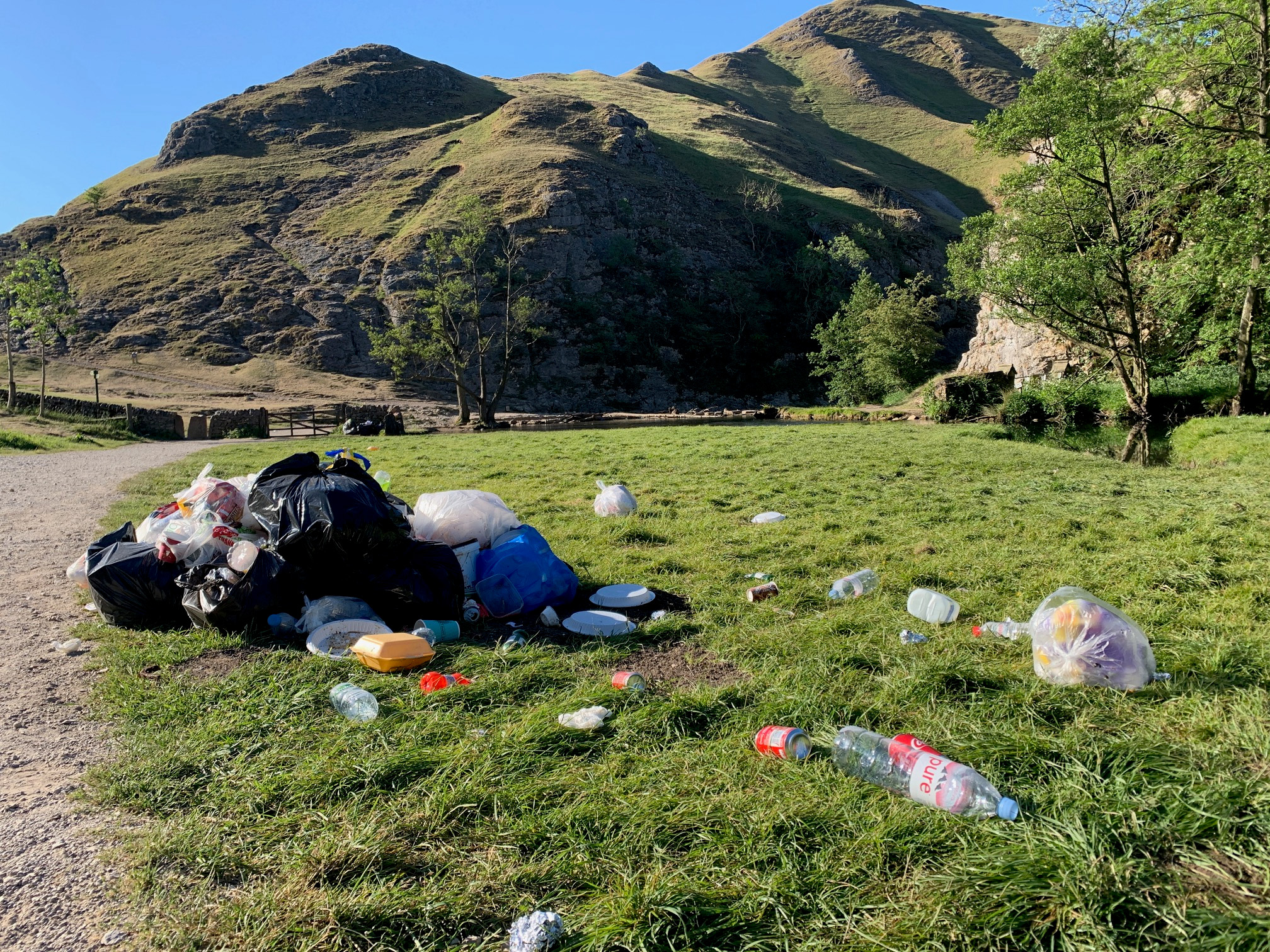
Almost a century later it’s still happening at this iconic location, except now Stanage is in a national park designated for its exceptional landscape value. But it could be a beach, nature reserve, regional park or any beauty spot – the sheer amount of rubbish people have been wantonly leaving in the countryside over the last few months is staggering. But why is this happening?
It’s tempting to assume that the apparent upsurge is a result of a new, largely urban audience unaware or untutored in how to behave in the countryside; or that some sort of lockdown safety valve has been released and for the moment anything seems to go when it comes to public misbehaviour. But that’s too simplistic.
As the 1929 example shows, throwing rubbish around the British countryside has been going on for a long time. Over the years there have been persistent attempts to address the problem, from the Countryside Code first developed in the 1950s through to the laudable initiatives of the Keep Britain Tidy group, CPRE’s Stop the Drop campaign, the Great British Beach Clean and even some memorable little TV wombles.
So why do people despoil the very places they apparently come to enjoy? Some of it is down to a basic lack of environmental awareness and education, as well as an absence of personal responsibility and good citizenship that surely must start in the home and at school? But the uncomfortable truth is that there are plenty of people who simply don’t seem to care and find such behaviour acceptable. We have become a materialistic and selfish society, all too happy to throw things out and let someone else pick up the mess. It’s a problem that extends all the way up the scale to fly-tipping and industrial pollution. However, perhaps the most insidious current threat to places like the heather moors of northern England and the heaths and woodlands of Dorset and Hampshire is from a small foil box packed with flammable charcoal – single-use disposable barbecues – which have led to a string of damaging fires.
But litter doesn’t just make the countryside look ugly, start fires and prove a hazard for wildlife and farm animals. Picking up other people’s rubbish costs time, money and is an unpleasant task. As lockdown began to ease in June, Lake District National Park staff collected over 300 bags of rubbish in a single weekend and in 2019 alone the Peak District National Park Authority spent £37,000 on removing litter – funds which could have otherwise supported, for instance, a ranger’s post. And in just two days in June this year an incredible 41 tonnes of rubbish was removed from the Bournemouth coastline, a clean-up task not unlike that faced by the organisers of large music festivals.
So how do we stop the litter louts?
1. Engage, educate, encourage
Perhaps we should be tough and focus on enforcement, since councils already have the power to issue £150 on-the-spot fines for littering? But resources are scarce and litter is rarely a priority. Instead, the likes of national park authorities, National Trust and campaigning groups continue to spread messages about responsible visiting and engage through local codes of conduct, such as #peakdistrictproud and Dartmoor’s #LoveMoorLife, which encourages visitors to bag up their own rubbish and take it home with them, including on-the-spot rewards from rangers for a few lucky ones.
2. Facilitate, collaborate
Let’s not forget that there are lots of people who continue to do the right thing. Local people, volunteers and outdoor enthusiasts alike often pick up other people’s litter, and perhaps there’s more that can be done to empower these individuals and groups, not just in terms of physically supporting litter-picks, but encouraging them to exert peer pressure on others. See https://www.litteraction.org.uk/
3. Behavioural change – an all-important nudge
Experts say that the best chance of changing people’s behaviour for the better is not to tell them what they can’t do but to coerce and incentivise them so they can. Like the successful 5p shopping bag charge, a deposit return scheme for items commonly thrown away, such as bottles and packaging, may also help change people’s behaviour. But core classroom messages about recycling and environmental responsibility (as set out in the 2017 Litter Strategy for England) must come from Government, be properly resourced and lasting. A deposit return for drinks containers, promised in the Resources and Waste Strategy of 2018, is still awaited.
4. The polluter must pay
As well as the carrot, for something as base and deep-rooted as this there has to be a stick. We should embrace the ‘polluter pays’ principle and penalise not just the behaviour of irresponsible consumers, but make those actually producing and selling the throw-away plastic bottles, pop-up tents and disposable barbecues also liable, at least in part, for the clean-up costs. Currently 90% of all Britain’s waste clean-up costs fall on the taxpayer, rather than on the manufacturers or fast food outlets making or peddling the throw-away items. And since the annual cost of picking up litter in Britain was estimated at £1 billion as far back as 2015 you can see the price we all pay.
Ultimately, though, littering our beauty spots and countryside in general on such a scale as we’ve seen recently is an appalling reflection on us as a society and the regard we appear to hold for landscape, wildlife and the wider environment. It’s surely time to demand something better?
* see https://www.cpre.org.uk/stories/looking-back-at-cpres-litter-campaign-successes/
Header image: Litter in the Peak District beauty spot of Dovedale (by Erwin van Vroenhoven)
