
Gritstone author Mike Raine takes a look at the thorny subject of AI and writing
‘It isn’t difficult to check facts these days, but this raises another question: how do we fact-check the fact checks?’
MIKE RAINE, GRITSTONE AUTHOR
AI, Archives, and the Fragile Future of Original Writing
I often advise people using AI to identify plants and other flora to double-check with a book, and I still think that’s sound advice. I’d be lying if I said I trawled through every book on my shelves each time I need an answer, but having read them, having that background knowledge, undoubtedly informs what I write. It gives me a critical awareness, a sense for when something really does need further checking.
Books are tremendously important sources of information. There are, of course, superbly factual specialist websites out there, but they need seeking out. A quick search won’t necessarily lead you to the depths of the British Bryological Society’s website, for example – though perhaps AI might.
Recently, in a conversation with Dave Monteith of the BMC’s Mountain Heritage Trust, I was reminded of the value of the written record and physical artefacts when researching. Handwritten notes in the margins of meeting minutes, scribbles on photographs, personal diaries — these things simply aren’t to be found online. They hold context, intent, and nuance that rarely survive digitisation.
This became particularly apparent while reading The Pennine Way – The Path, the People, the Journey by Andrew McCloy. Andrew draws on notes from meetings held decades ago, searches the corners of his memory for half-forgotten references, and creates primary information through interviews and conversations. That depth cannot be replicated by a quick online search.
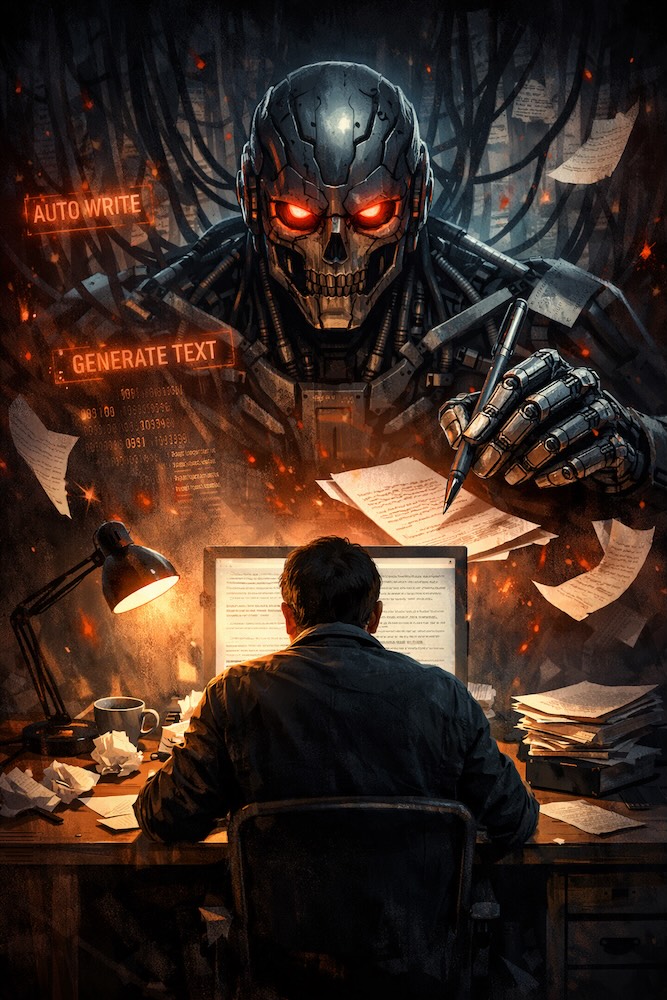
The job of the author has changed. Information is now easy to obtain, but it comes with important caveats. Not everything AI produces is correct. It can misalign facts, mix up references, and pull in unrelated information simply because the words look similar.
Artificial intelligence does, however, excel at speedy searching and pulling information together. It helps with spelling and grammar too. Despite the shelves of reference books in my study, I still turn to the internet far too readily to check what I want to know.
The unsettling part is how quickly AI is improving. As this blog goes online, it becomes fodder for AI bots, to be hoovered up, distilled, and fed into someone else’s search or AI-generated document. Every time we digitise archived research or translate handwritten notes into online content, those once-rare sources become available for mining.

I once wrote a blog about Quality Mountain Days in relation to the Mountain Leader qualification. Following some syllabus changes in wording by Mountain Training, confusion arose and misinformation began to spread. Several days later, another blog appeared with uncanny similarities to mine. A regular reader noticed that entire sentences had been lifted directly from my work. We suspected AI had been used, and because there was little information online at the time, it had simply regurgitated my content. It was a wake-up call.
Right now, AI is a powerful tool for searching, sense-checking, and proofreading. But some people are asking it to do the thinking for them: “write me a blog”, “create a social media post”. These pieces are often recognisable to the well-read. AI can already produce books — though so far, not very good ones. See https://www.bbc.co.uk/news/articles/cp8k5gezykyo
AI is learning fast, and as we provide more raw material, it can only improve.
It’s hard to imagine AI ever creating something as personal and well researched as Andrew McCloy’s account of the Pennine Way. Yet history shows us that many once-unimaginable changes slip quietly into everyday life. For now, original thought, primary research, and engagement with books and archives remain priceless. The physical act of reading is mindful, immersive, and rewarding, but as time marches on, finding our own literary gold may become an ever more challenging task.
Mike Raine is the author of ‘The Mountain Leader’ and ‘Nature of Snowdonia’. Both are available from our shop.
The views expressed in this post are those of the contributor and do not necessarily represent the views of all members of the Gritstone co-operative.

