Posted on

The French Partridge

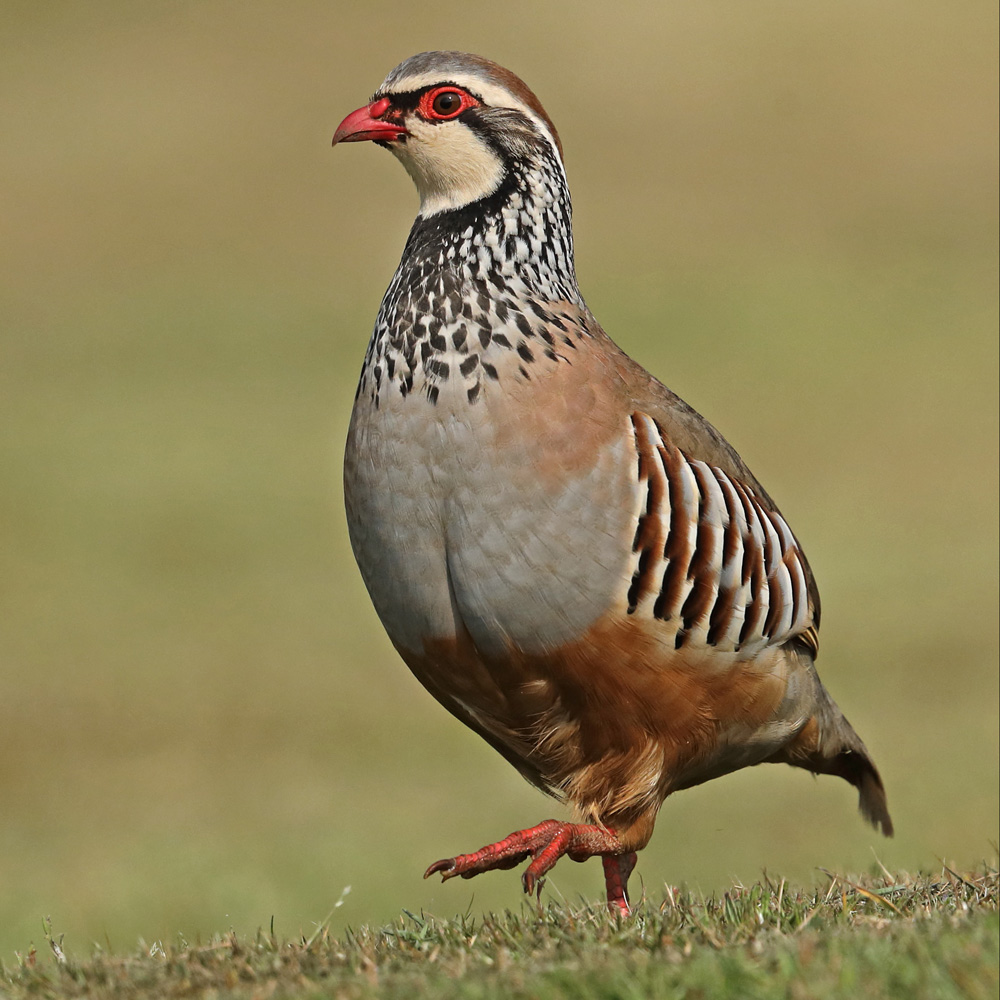
Image of a reddish brown bird, with a red beak, red coloration around its eye, white throat and black speckled neck. it's lifting one foot as it walks on a grassy meadow, with most of the grass blurred out to give focus to the partridge

Gritstone author Mike Padgett walks into the Yorkshire Wolds only to be confronted with gunfire.

‘The sound of gunfire usually stops when the hidden lookouts in their green and brown attire spot a walker on the footpath… Not this time. The gunshot continues, and the sound cracks across the valley and over the path like invisible lightning.

MIKE PADGETT, GRITSTONE AUTHOR

French Partridge

They are killing birds again this morning as I enter the Yorkshire Wolds valley leading to Arras. The sound of gunfire usually stops when the hidden lookouts in their green and brown attire spot a walker on the footpath. They break cover, drop their white flags, raise their red flags, and the valley goes quiet. Not this time. The gunshot continues, and the sound cracks across the valley and over the path like invisible lightning. The guns are to my left. I can’t see the pegs through the thick hedge but they must be very close.

I turn my head away, and half-shut my eyes, expecting pellets to come rattling down on me through the overhanging hedges. But instead of pellets a bird falls untidily out of the sky and hits the ground with a muffled thud ten yards in front of me. I expect to find a scene of blood and twisted wings but the bird has landed on its belly, head to one side, motionless, not a feather out of place. Its red legs, red bill and red eye ring look untouched and bright on the chalk path. I slow down but don’t stop. The French partridge is already dead. 

There are pickup trucks and land rovers parked in a line in a clearing in the hedge a few yards farther up on the left. Some of the vehicles’ boots are open and dogs behind grills look at me with no interest. A trailer is attached to the pickup nearest the path and on display is the morning’s tally. At least a hundred French partridges, laid out side by side in rows, face down, all pointing the same way, perhaps four deep.

A French Connection

The French partridge, introduced from continental Europe in the seventeenth century, is providing good game for the guns this morning. And the colourful little bird is not the only life form from France to have died violently in this location.Many centuries before the ancestors of this morning’s kill arrived in the UK, an Iron Age people from the Champagne area of France, known as the Parisi, fought with rival tribes in this valley. Parisi square barrow cemeteries containing speared bodies and chariot burials have been found less than a mile from the morning’s bag of lifeless partridges in front of me. 

Now a man is standing at the side of the loaded trailer, dressed like the lookouts but without a gun or a flag in his hand. He is the gamekeeper. I’ve seen him driving his quad bike through the village and up onto the hills to replenish the feeding hoppers tucked away in the hedges. I avert my eyes, determined not to engage with the gamekeeper, to show no sign of approval of what he’s doing, or say something that I might regret. But he says good morning and I can’t help saying good morning back. All three players in this conflict, any conflict, are there in that little scene: the hunter, the hunted and those who turn their backs and walk away without comment.

The shooting has stopped. The lookouts have raised their red flags and the only sound is the whoosh of wind turbines on the valley top. I continue along the path towards Arras and argue with myself. This is what I should have said. Look Mr Gamekeeper. I respect, even admire your gun skills, your bird-rearing skills, your sense of purpose, your teamwork. But I hate to see you killing those birds. You’ve looked after them all year in all weathers and then you organise their slaughter. Why? To give the lord of the manor the pleasure of showing off his estate to his shooting guests? Showing off how well he has trained you and your beaters. In my inner argument the gamekeeper doesn’t reply and I feel better.

When I’m a quarter of a mile farther up the path the shooting resumes, killing off any chance of birdsong returning to the valley this morning. Or any hope of a sighting of the local peregrine falcon locked onto its prey. I leave the valley where it meets the Wolds Way, the sign post pointing south east to Hessle, north east to Filey, and look back to where the killing is taking place. How many more game birds will fall heavily out of the sky onto the floor of this ancient trail today? There will be no dignified ending for my dead partridge, killed for sport, waiting to be picked up and stacked on top of its dead family before being put on display, plucked and eaten. No Billy Casper’s Kes. No Helen Macdonald’s Mabel. No little graves dug alongside the iron-age burial sites on this very same path up the valley to Arras.

The views expressed in this post are those of the contributor and do not necessarily represent the views of all members of the Gritstone co-operative.

Image of red legged adult partridge © Neil Bowman(istockphoto).
Posted on

A glimpse into the making of KES

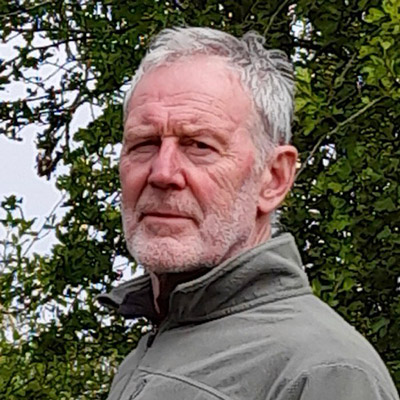
Headshot image of Mike Padgett

Gritstone author Mike Padgett looks back at the bit part he played in Kes and the big part the film played in his life

‘Ken Loach and Tony Garnett offered Barry Hines an opportunity to write a script for The Wednesday Play but he turned it down. He was busy working on a new novel about a boy and a kestrel. They were intrigued and asked if they could be the first to see the finished manuscript. It was called ‘A Kestrel for a Knave.’

MIKE PADGETT, GRITSTONE AUTHOR

When Play for Today returned to TV in November last year I thought about all those classic social realist dramas in the original BBC 1 Play for Today series and its precursor, The Wednesday Play. Those ‘kitchen sink’ dramas, broadcast in the sixties, seventies and early eighties, sought to depict the everyday lives and struggles of working class individuals. Among them were hard-hitting dramas such as Cathy Come Home and Up the Junction, both directed by Ken Loach and produced by Tony Garnett.

In their search for social realist writers, Ken Loach and Tony Garnett approached Barry Hines, a teacher and emerging talented writer of working class life. Barry had written a novel, The Blinder about a brilliant footballer with a chip on his shoulder. Ken and Tony offered Barry an opportunity to write a script for The Wednesday Play but he turned it down. He was busy working on a new novel about a boy and a kestrel. They were intrigued and asked if they could be the first to see the finished manuscript. It was called ‘A Kestrel for a Knave’.

Continue reading A glimpse into the making of KES
Posted on

Stepping inside the house of Gritstone Publishing Cooperative (Part 2)

Image of a mixed-race woman about to kick a football on a green background

Gritstone author Mike Padgett on his experience of publishing a novel with the Gritstone Publishing Cooperative – part 2 Getting through the selection process

How I made it through Gritstone’s selection procedure

I first met Colin Speakman at a Saturday book fair in the Ridings Centre in Wakefield in 2024. The fair was organised by the charity Promoting Yorkshire Authors (PYA). We were there, along with twenty or so other authors, to sell our books and promote PYA. Colin is famous. He has written or edited over fifty books, mainly about Yorkshire people and the Yorkshire outdoors, and he is a founder member of Gritstone Publishing Cooperative. We shared a stand and one incident particularly impressed me. A married couple with a child took an interest in one of Colin’s books. The husband was from Romania. He had fled the country a few years ago and now lived in Bradford with his wife who was Yorkshire born and bred. His wife smiled and said her husband still felt homeless. Colin looked the man in the eye and said, ‘You’ve married a lass from Yorkshire. You’re a Yorkshireman now. You’re one of us.’

The day went well in Wakefield with plenty of shared stories from people passing by and we made a few sales. At the end of the event Colin and I exchanged a couple of our books and I thought that was the end of that.

A pleasant surprise

front cover image of Mike Padgett's book "Scrap". Image shows a winding wheel under a blue sky with clouds.

A couple of weeks later I got an email from Colin saying how much he’d enjoyed reading Scrap. Scrap, he said, has Yorkshire grit running through it and he asked if I would be interested in applying to join Gritstone Publishing. The cooperative was looking to increase its membership from seven to eight or nine that year. Colin gave me an outline of the way the cooperative works regarding production of books, marketing, and collective support (see my previous blog).

It sounded interesting. He explained how the recruitment process worked: apply in writing outlining why I want to join the co-op and what I think I can offer; give details of the books I’ve published and the outline of any book I am working on; be aware of the need to attend meetings at Hebden Bridge three or four times a year; attend an informal interview at Hebden Bridge and meet the other seven members.

What’s to lose?

Image of a mixed-race woman about to kick a football on a green background

My application went off and a few weeks later Gritstone invited me over to Hebden Bridge for lunch at the Town Hall to be followed by an interview. It was a pleasant surprise to be treated with such civility, especially after a number of no replies from certain publishers.

I put on my best pair of jeans and caught the train from Brough to Hebden Bridge. What a lovely day it turned out to be. The other members of the co-op were as friendly and welcoming as Colin. Over lunch they quizzed me and I quizzed them before we all retreated to the interview room. I explained how Kicking Off, the novel I was working on, was, like my previous novel Scrap, a piece of social realism based on ordinary working people in Yorkshire. Gritstone liked my work and my story. Their main concern was whether to expand from their traditional publishing base of non-fiction writing covering mainly the outdoors, nature and landscape, and move into fiction writing preferably with a Yorkshire connection.

Success

I went home and carried on writing. Whether Gritstone wanted me or not, the experience had warmed me up and my writing went well for the next few weeks.

Then I got the offer to join the cooperative and I jumped in. Plenty of support from my colleagues and expertise at my fingertips. It’s grand.

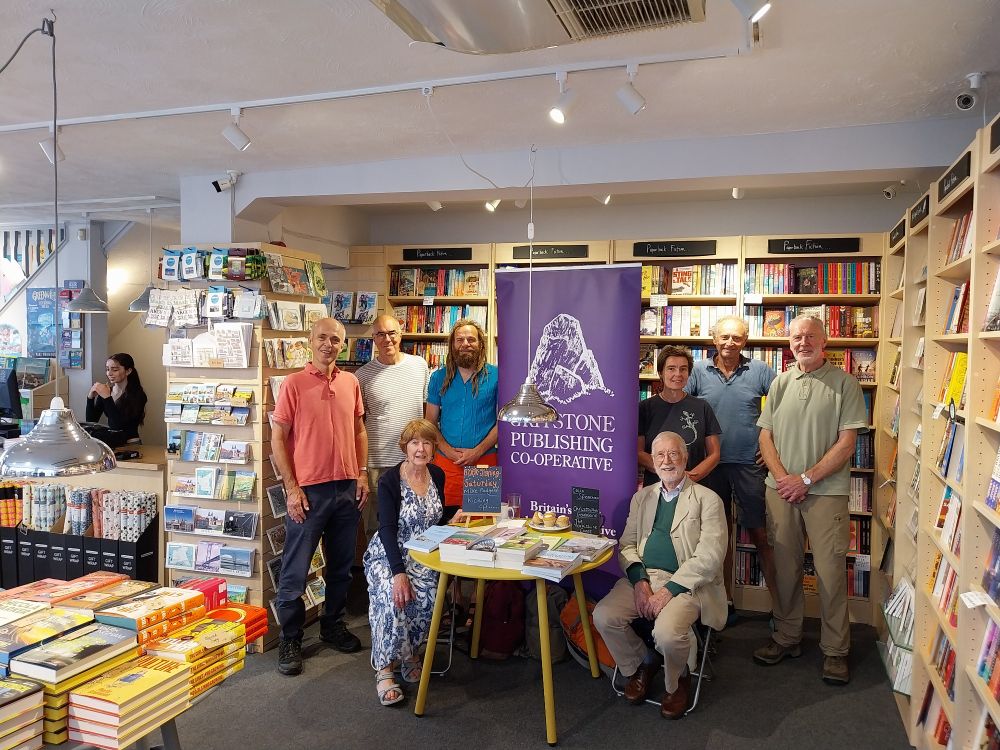
In a book shop, all eight members either standing or sitting in a semicircle in front of the Gritstone banner and behind a desk displaying books recently published by Gritstone
The full Gritstone team of eight at a book launch in Beverley

If you think Gritstone is worth checking out and feel you would fit in, follow our website and look out for details of our next selection event planned for early 2026 to coincide with the cooperative’s 10th anniversary.

Mike Padgett is the author of Kicking Off, published by Gritstone

Posted on

Stepping inside the house of Gritstone Publishing Cooperative (Part 1)

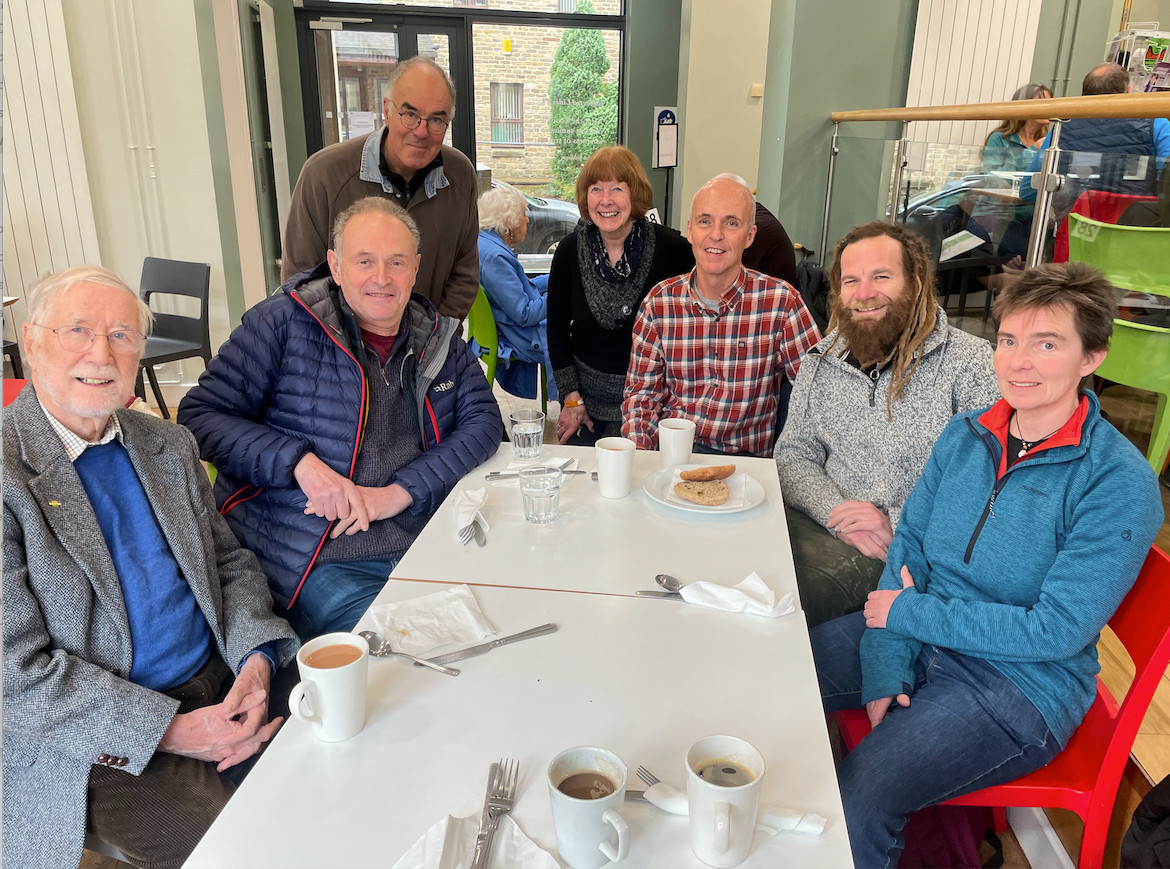
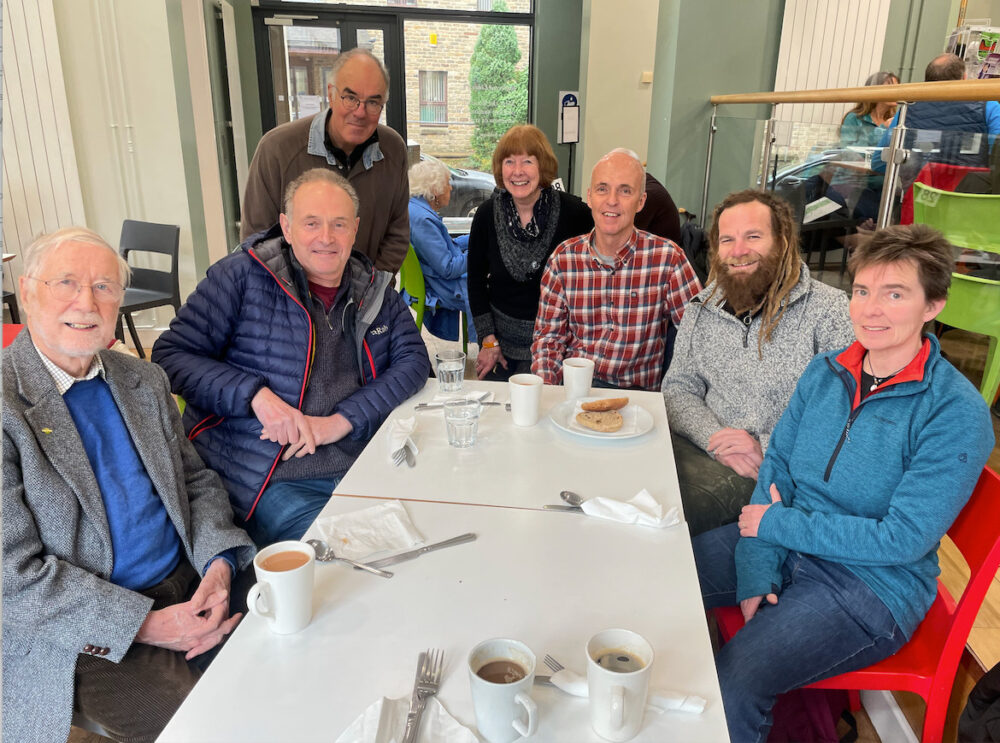
in the canteen at Hebden Bridge town hall. All seven members (at the time) of Gritstone sitting around dining table during lunch, all looking at camera

Gritstone author Mike Padgett on his experience of publishing a novel with the Gritstone Publishing Cooperative

“instead of standing outside the front door listening to strange noises through the letter box, I was invited into the house”

Mike Padgett, Gritstone Author

No apologies – this blog is about my experience of publishing my novel Kicking Off through Gritstone Publishing Co-operative, the company I joined in May last year.

The blog is aimed at writers contemplating self-publishing a book. I’ll tell you how Gritstone differs from the (very good) self-publishing company I used for my previous two books. I’ll tell you what I found unique about Gritstone. And next time I’ll tell you how I got through Gritstone’s selection process.

It worked so why change?

Image of front cover of Mike Padgett's book As Far As We Can - a red VW campervan on a winding road with green hills in background

If you’ve finally finished your manuscript and are now riding the highs and lows of self-publishing – whether you’re doing everything yourself, or using Amazon, or a vanity publisher, or one of the good, honest self-publishers out there giving value for money and no false promises – you’ll know how lonely and overwhelming the process can be at times.

Well that’s how it felt to me before I joined Gritstone Publishing Co-operative in 2024. Back in 2021, when I was looking for a publisher for my travel memoir (As Far As We Can), I had no idea what was involved. But I was optimistic. I thought it was just a matter of sending off my manuscript to a handful of the best sounding publishers listed in the Writers and Artists Yearbook and wait for the offers to come in. Have you been there? It’s a bit of a downer when hardly anyone even bothers to respond. Then you get the call and an offer of a contract only to find within minutes, and before you can shout, ‘I’ve made it’, that the offer is from a crafty vanity publisher with eyes on your ego and your money.

But I kept on going with only my partner for encouragement. Then I had some luck. I spotted a good review of a self-publishing company called Grosvenor House Publishing in the Writers and Artists Yearbook. They were open and honest. They accepted my manuscript and yes, they took my money but all the costs were itemised. I had to pay up front (about £800 at the time), follow their rigid guidelines, and in return they committed to producing a quality product. The contract I signed made it very clear that my book would be classed as self-published, all marketing was my responsibility, and I would retain all the rights.

front cover image of Mike Padgett's book "Scrap". Image shows a winding wheel under a blue sky with clouds.

It all went to plan and Grosvenor House certainly delivered a quality product. The paperback looked great and I had that wonderful feeling you get the first time you see your book in print. Grosvenor House arranged for the book to be available through all major retailers and bookshop, they printed copies on demand (POD) so there were no piles of books stacked in my garage, and paid regular royalties. I was so impressed I used Grosvenor House two years later for my second book (Scrap).

When anyone asks how it all worked I tell them I pushed a cheque through an imaginary letter box marked Grosvenor House, swapped a few emails and phone calls with their very friendly staff, listened blindly to various bangs and clatters though the letter box, then a few weeks later out popped my book, all shiny and new. However, the publishing process remained a bit of a mystery, although I did learn some of the technical jargon. If there was a quiz about Metadata, key words, long and short descriptions, ISBN’s and royalty payments, I think I’d do ok.

What’s unique about Gritstone Publishing?

Image of a mixed-race woman about to kick a football on a green background

So, if Grosvenor House was so good, why did I switch to Gritstone Publishing, Britain’s first author-run cooperative, for my third book (Kicking Off)? Did Gritstone offer me a six figure sum advance payment? Did they say they’d take care of all the editing, the cover design, printing, distribution, liaising with all the major retailers? Did they say they’d do all the marketing and promotion – the press releases, the newspaper reviews, setting up the interviews on radio and TV, and all I had to do was turn up and smile (nervously) and sign thousands of copies of Kicking Off?

No, Gritstone Publishing offers none of that. It’s still self-publishing. But instead of standing outside the front door listening to strange noises through the letter box, I was invited into the house to sit around the kitchen table. I sat with my seven colleagues at Gritstone, each one a published author with a particular skill and expertise in an aspect of publishing. We communicated daily by email and phone, paired up for a coffee and a chat when I had a specific need, and met up as a full team twice in the year at Hebden Bridge. In between the meetings two members, Eileen and Chiz ran masterclasses in marketing and web design.

Throughout the year my colleagues offered advice, guidance and support but it was ultimately up to me to decide which contractors to employ for each stage of the publishing process. There was no upfront one-off payment (other than a £250 loan to the cooperative). Instead I paid for each individual stage of publishing. As a result the total cost was less than I spent on my previous books. But more importantly, I was in control of how my book would be published and that felt good.

in the canteen at Hebden Bridge town hall. All seven original members of Gritstone sitting around dining table during lunch, all looking at camera)
The original seven Gritstone members at Hebden Bridge Town Hall

Next time:

How I successfully navigated Gritstone’s selection procedure.


Mike Padgett is the author of Kicking Off, published by Gritstone