Gritstone author Andrew Bibby looks back on 25 years of campaigning for access since the Countryside Rights of Way Act came into being and ponders the next step in the Freedom to Roam process.
I moved to the south Pennines house where I still live today from inner-city Coventry more than thirty-five years ago. It was quite a contrast. Instead of being woken in the small hours by the noise of a fight outside the nightclub across the dual carriageway opposite I got woken up by the sound of ducks and geese on the nearby Rochdale Canal.
And of course there were now hills on my doorstep which I lost no time in getting to know. Our beautiful moors have survived all that the Industrial Revolution could throw at them and have emerged the other side (almost) unscathed, even if the peat is more eroded than it should be and the water more acidic.
“Of course, there was always the option of tresspassing.”
But at the time when I moved north there was also a big frustration when it came to walking or running on the moorland: the ‘keep out’ signs which demarcated the land from which we were all excluded (unless we had paid to be there in the Autumn with our guns to try to bag as many brace of grouse as we could). It meant, for example, that the highest land in my part of the Pennines, Boulsworth Hill, was out of bounds if I wanted to get there from my side of the Yorkshire/Lancashire border. So too were impressive outcrops of millstone grit rocks, such as the Alcomden Stones, the Dove Stones and the Hare Stones.
Of course, there was always the option of trespassing. Back in the 1990s, TGO magazine actually ran a piece of mine suggesting an all-day watershed walk in the area which certainly would have involved quite a lot of surreptitious illegality for anyone taking me up on my proposal. But by then things were changing. By then a number of us locally had begun to take action. The Access to Boulsworth Campaign (ABC) got going. We had public meetings. We had newsletters. We took prominent Labour politicians walking on to the forbidden moors (including Michael Meacher, who was to go on to play a major role in steering the Countryside and Rights of Way Act 2000 through Parliament). We tried to make ourselves a nuisance.
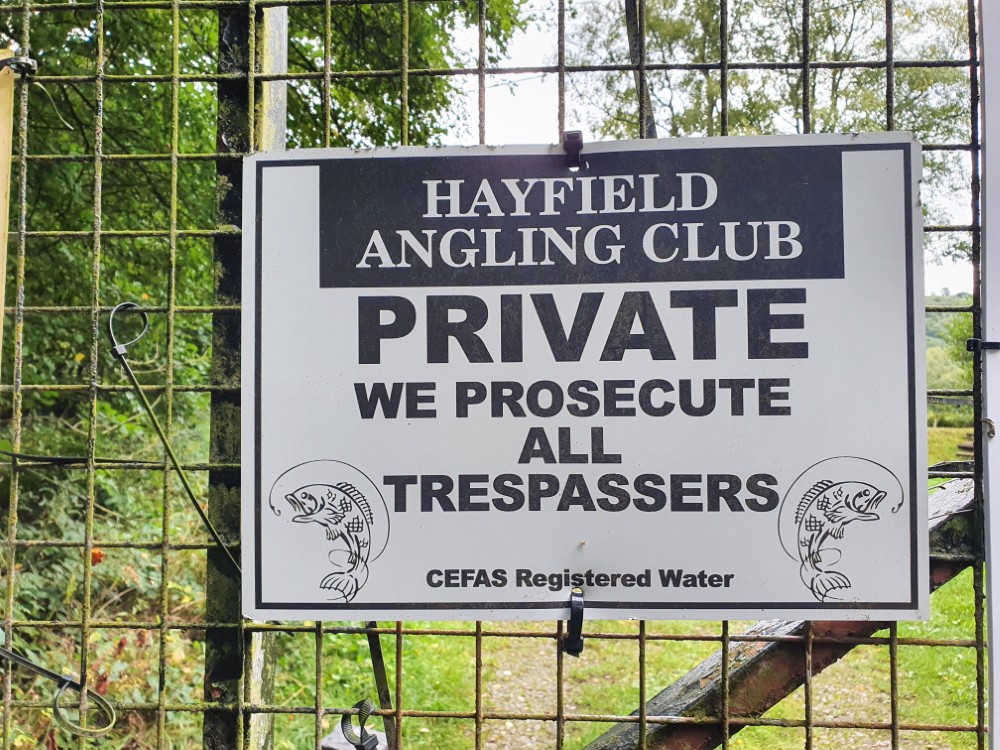
We weren’t the only people campaigning for access of course, but in the end all the effort was worthwhile and those ‘keep out’ signs had to come down. The CRoW Act didn’t by any means give us everything we’d like in terms of countryside access but it did mark a historic moment in terms of access to upland areas in England and Wales. (Scotland’s history is of course different).
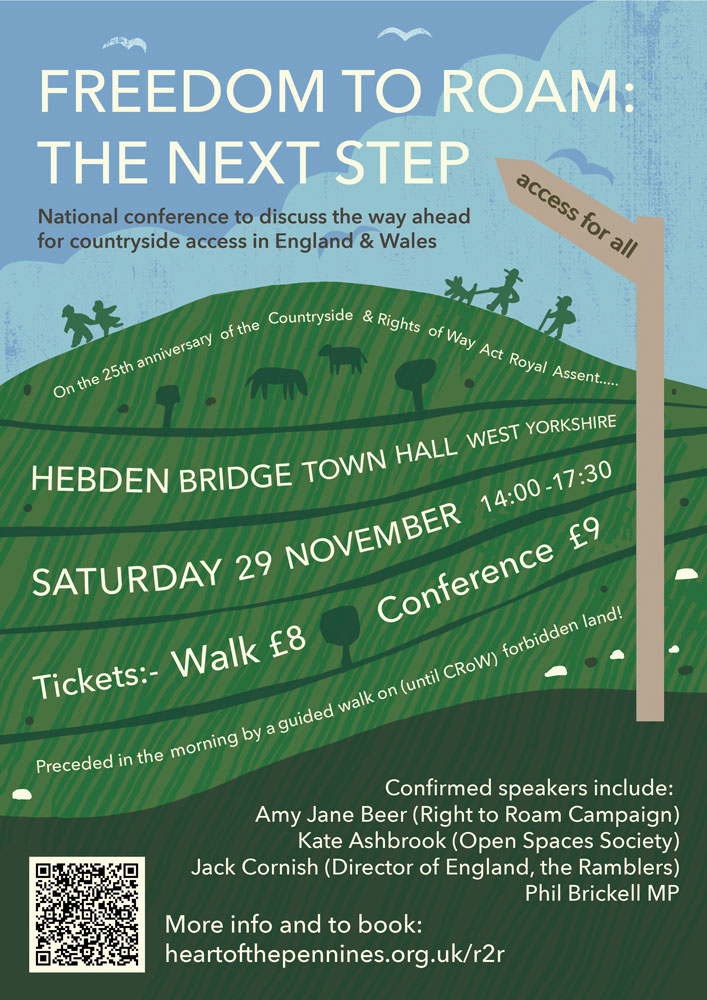
This November will mark the 25th anniversary of the CRoW Act receiving its Royal Assent and entering into law, and – although ABC is now a distant memory – some of us involved in the campaign then have got together again to mark the occasion. We’re organising a national Freedom to Roam: the Next Step conference on November 29th in the main hall of the community-owned Hebden Bridge Town Hall and preceding it in the morning with an organised walk on moorlands close to Boulsworth which – until CRoW – were forbidden to us.
The day isn’t just intended to be a celebration. It’s an attempt to gather all our forces for a new push to persuade the current Labour government to extend the rights which we can enjoy to get to know our countryside. Despite CRoW there is still much unfinished business. So many woods remain hidden away behind private signs. Our river banks are too often inaccessible. And, bizarrely, land demarcated under CRoW as access land sometimes can’t actually be legally accessed because there’s no way to reach it without trespassing. The laws defending land ownership and private property still trump the natural desire of many of us to experience the great outdoors.
This is a good time to focus again on this issue. There are hopes that the government may have published a Green Paper on access and the countryside before our event in November – not a White Paper, so not necessarily anticipating future legislation, but at least something to discuss. And we’ve arranged speakers and workshop leaders who we think will ensure we can make the most of the opportunity. Our speakers include veteran campaigner Kate Ashbrook of the Open Spaces Society (Kate was a regular speaker a quarter of a century ago at our ABC events!) and Amy-Jane Beer from the feisty Right to Roam group which is using social media to build new support for the issue.
Details are at heartofthepennines.org.uk/r2r
(This article, in a slightly different form, first appeared in Outdoor Focus magazine)
The views expressed in this post are those of the contributor and do not necessarily represent the views of all members of the Gritstone co-operative.
