












Description
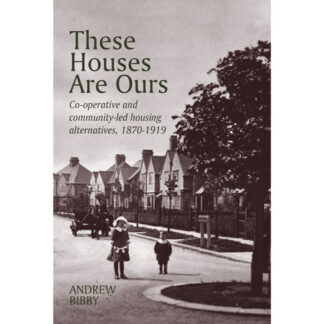
The years before the First World War saw the development of a widespread housing movement in Britain which delivered homes at affordable rents through co-operative and community endeavour.
From Cornwall to central Scotland, Suffolk to South Wales, working-class tenants moved into their newly constructed homes and began to create communities. As Birmingham housing reformer John Nettlefold put it in 1914, tenants might not be able to own their individual houses but they could nevertheless say that, collectively, ‘these houses are ours’.
Many of the estates adopted ‘garden village’ principles as a radical alternative to conventional urban streets of high-density housing. Community meeting rooms, allotments, sports facilities and children’s playgrounds were frequently included.
As Andrew Bibby points out in his richly researched book, this almost forgotten history mirrors uncannily current interest in bottom-up community-led efforts to meet housing need. As we face a housing crisis once again in Britain, and with council housing no longer the default means of providing affordable homes, the alternative models for social housing developed more than a century ago offer much that is relevant to us today.
Reviews of “These Houses are Ours”
“Andrew Bibby has written a very readable and informative study of the policies, politics and personalities of an unfairly neglected part of our housing history. His book is both a significant historical record and a primer for those who would learn from the past to democratise our current housing practice.” – John Boughton, author, Municipal Dreams
“Andrew Bibby has become a specialist in rescuing important episodes in our co-operative past from the enormous forgetfulness of history – and we should be thankful for that.” – Co-op News
“What a fantastically researched and well written history of the co-operative housing movement, formed around the period from 1870 up until the 1919 Addison Act. Andrew Bibby is clearly a supporter and advocate for co-operative and community-led housing solutions, and this shows in the research and intricate detail of the book.” – Journal of Co-operative Studies
“A book I would recommend for its painstaking research and also its endeavour to contextualise co-operative housing both in the lived experience and in the national framework of housing provision” – Family & Community History
“Uniquely detailed… Well worth a read” – Tom Chance, The Land magazine
“With this comprehensive and richly detailed work, Bibby has succeeded in his goal of emphasising the co-operative housing movement’s contribution to the British urban environment. The book will be a boon to anyone wishing to learn of pre-council housing alternative tenure forms, and to the development of housing practice in general.” – Scottish Labour History