

Gritstone author Eileen Jones wades through litter on the lakeshore to examine the problems of fly camping and the damage caused to the environment in popular tourist areas
Trees are hacked down for firewood. Disposable barbecues are left smouldering with disastrous consequences. And abandoned camping equipment is becoming a familiar sight in the Lake District.
Eileen Jones, Gritstone Author
It’s the worst kind of irresponsibility in a summer of drought when wildfires have spread across moorland areas in several national parks – and even in woodland on the outskirts of London. But for some objectors, the aesthetic value of the natural world is being destroyed, alongside damage to the environment. They point to tents pitched along the shore of Ullswater, campervans churning up the grass beside the road opposite the Wastwater screes, and camping kit abandoned up in the mountains at Stickle Tarn and Sty Head.
One volunteer vigilante group has even launched a new tactic of NOT picking up litter for several days, to illustrate the scale of the problem.
A wild night out
The lure of the hills at night time has long been appreciated by walkers and climbers. I’ve pitched a small tent on top of my favourite little mountain, Loughrigg, and my friend, the late Julie Coldwell, often slept out under the stars at Lily Tarn. When my children were young, we all slept on the summit of Latterbarrow, with no tent, just sleeping bags, in a reliable warm and dry summer.
Were we breaking the law? Wild camping is reckoned to be permissible above the highest intake walls, around 1000ft, and lowly Latterbarrow is only 800. In fact, wild camping is technically not permitted anywhere in the Lake District without prior permission from the landowner. The National Park Authority does not have the power to allow camping on private land, and they do not permit camping on the small amount of land that they own. Camping in car parks or on roadside verges is not allowed at any time.
The LDNPA says that if you choose to wild camp, it is normally tolerated if you camp above the highest fell wall, well away from towns, villages and lake shores. Leave no litter – this includes not burying litter and removing litter if you find it, and don’t light any fires, even if there is evidence that fires might have been lit before. Stay for only one night, keep groups very small – only one or two tents, camp as unobtrusively as possible with inconspicuous tents which blend in, and carry out everything you carried in.
“Wherever you pitch, please remember that the landowners or their representatives have the legal right to order you to break camp and move on,” they say.
Police patrols
But after many concerns through early summer about lakeshore problems, patrols have now been stepped up across the Lake District to crack down on fly camping – the term used to describe irresponsible and often illegal camping practices that leave behind litter, damage the environment, and disturb other visitors.
The LDNPA alongside Cumbria Police and National Trust rangers launched the first of the enhanced patrols at the beginning of August at Ullswater. Officers split into teams, with some joining lake rangers on the water to spot camping activity and alert rangers on the ground.
These coordinated patrols are continuing at Derwentwater, Windermere, Wasdale and Coniston, at various times of day and night. They will run alongside routine checks carried out by National Trust and LDNPA rangers.

The initiative is part of a wider visitor management strategy involving key partners including Cumbria Police, Cumberland Council, Westmorland and Furness Council, the Cumbria Police, Fire and Crime Commissioner, and major landowners. Together they share information and coordinate efforts to address anti-social behaviour linked to outdoor tourism.
Is the problem a part of what’s been called an “increase in incivility” since the pandemic lockdown? Several academic studies worldwide have looked at the issue, including this from the Czech Republic. In the UK, there has clearly been a marked disrespect for authority, after months of being told what we could not do by leaders who were not obeying their own rules.
Education, education, education
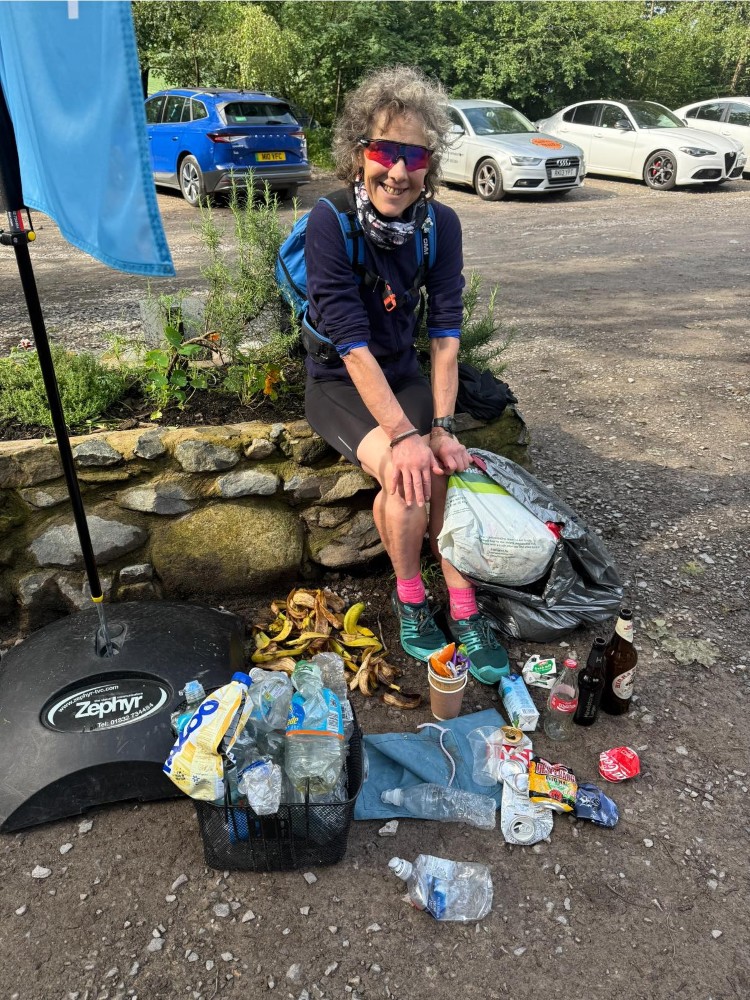
Educating people is key, says Lindsay Buck, known as the Wasdale Womble. Most days Lindsay cycles from her home in Gosforth to Wasdale Head, then climbs Scafell Pike, collecting litter along the way. She reports her findings on facebook, occasionally entertaining (who would take a whole coconut up a mountain and leave it there?) but usually distressing.
Photos by her fellow womble Mick Pearce show the scale of rubbish left at the summit shelter of England’s highest mountain. Lindsay herself carries bags-full back down the hill.
On her daily journey she’s seen the growing problems alongside England’s deepest lake. “Fly camping along Wastwater is a real issue and needs all the agencies including those at the top of the National Trust to work harder together both in our area but as a bigger conversation about how we encourage people to explore rural areas without negative impact” she says.
“It’s a huge uphill task to get those at the top of interested parties to take notice/actually do anything. Those on the ground are frustrated as well as being under an enormous amount of pressure. It needs addressing at government level as well as local and could be hugely impacted by better education, engagement and enforcement when required. The vast majority deserve better. I meet such lovely folk everyday; it’s a shame small minority are allowed free rein.”
Binfluencers
In the North Lakes, a group of litter-pickers has set up who call themselves the Binfluencers, a play on the social media influencers which volunteer Annie Garforth accuses of being “the death of this place, as they compete for likes, follows and the perfect photo without mentioning anything about the Countryside Code”.
“It seems to be a trend to hang a dog poo bag on a tree like a Christmas decoration,” she says. “And the amount of human waste is ridiculous. We found a garden chair that had been carried to a lakeside camp with a hole cut in the middle so they could do their business.”
Now her group has devised a new tactic, to deliberately NOT pick up litter until a certain date, to highlight the extent of the problem. Meanwhile, following reports of fly camping and BBQ use along the Derwentwater shore, officers from Allerdale Neighbourhood Policing Team have been carrying out patrols and using the Keswick Launch to identify hotspots and deter unlawful activity. They say: “We want to remind the public that BBQs and open fires pose a significant fire risk and can cause harm to the local environment and wildlife. Fly camping often results in littering and damage to the lakeshore, which will not be tolerated.”
Mess in the mountains
But it’s not only at lake level where the fly camping problems are increasing. Mountain rescuers searching an area above Patterdale came across huge quantities of litter at a mountain cave known as the Priest’s Hole. For geologists this is classed as a ‘fault’, caused by ancient earth movements, but to generations of climbers, wild campers and walkers, it offers one of the best shelters in Cumbria, and a 180-degree panorama of the northern Lake District. Its fame in the outdoor world is such that it has a visitors book.
But a missing person search using MRMap (automated drone search technology developed by Mountain Rescue) found heaps of rubbish below the cave. Two members of the Duddon and Furness Mountain Rescue team, equipped with a large 113L sack, decided that they would spend some time collecting it up. The drone provided images and locations for each item, but while collecting these they found more items, not see by the drone, tucked under boulders. They had to make a second journey into the hills to collect the remaining rubbish.

Graham Uney, mountain guide and former fell top assessor for the LDNP, had clearly lost patience when he wrote on social media: “Here’s a random thought. Do you think that if those of us who care about our wild spaces just stopped clearing up all the shit, abandoned tents, fire scars, disposed barbecues and other crap that we find in the countryside, the people who leave all this behind would eventually think this place is a shit hole and stop coming? Don’t worry, I’m not advocating that we do this. It’s just very dispiriting at times, and it feels like there’s no end to it.”
Eileen Jones is the author of Loughrigg: Tales of a Small Mountain, published by Gritstone
The views expressed in this post are those of the contributor and do not necessarily represent the views of all members of the Gritstone co-operative.
